Thursday, January 31, 2019

Two weeks without a home computer!

For the past two weeks my home computer has been disconnected while we renovated our home office with new insulation in what was a very cold room. While the work took just two days we had to endure delays when the workmen doing the job didn't turn up, and then waiting for plaster and paint to dry. This morning I finally put everything back together and am back on-line.

So - what's it like without a home computer? Well, I did have an iPad so was not completely disconnected - but I hated being without my desktop PC and two screens. Putting everything back together provided an opportunity to untangle all my cables and put everything back together more tidily. While under my desk is still a mass of wires - it's a lot better now. Sound is not back working yet - but I'll get to that.

Some think people we should all take a break from things - for example not drinking and/or not using technology for a while. But a dry and disconnected January is not for me. If I'd known it would take two weeks before I could use the computer again I would have set it up somewhere else in the house. I have had to put things on the long finger while I was without a computer, and I have a few personal emails to respond to. Work has been busy and hectic since I returned after the Christmas/New Year holiday - I genuinely had very little time to use my work computer in the College for personal stuff (something I probably should not be doing anyway?). Anyway - it's good to have my computer again. I missed it!

My tidy desk - for how long?

Monday, January 21, 2019

New Semester!

In just under an hour I will have my first class for the new semester when I take a Higher Diploma in Data Analytics class for Data Visualization. It's been just over month since my last class - in between we obviously had the holiday season, I also spent almost every day since the New Year grading projects/assignments/exams. I can't wait to get back to class!

Image source: McNair Secondary School.
A new semester is exciting, but it also can be a bit daunting. This semester I do not have a new subject to teach, though I am revamping one module (Advanced Business Data Analysis) quite a bit. While it's nice to be able to re-use material from previous years and get the same modules again to teach - I've always liked having something new. Semester II last year was one of my busiest ever, but I expect it to be a lot less busy this year. I always look forward to meeting new students - two of my modules are with new classes. Equally, I like to see familiar faces - the other two classes I have are with students I taught in semester I.

The two major changes for me this year are that I will be teaching three nights a week for the first time ever. This will be a challenge, but the upside is that I will have the mornings off on those days. I will also be teaching a module (R Programming) on-line again - this is the same module I taught on-line last semester, but to a new group of students. While I feel I did OK in this on-line module last semester, there is lots of room for improvement. While I don't plan a new series of reflective blog posts, I might write a post every now and again.

Here's to the New Semester!

Wednesday, January 09, 2019

January Courses at the National College of Ireland

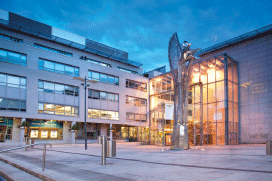
National College of Ireland,
Changing Lives Through Education.
January is of course a time for new year resolutions - many people might be considering taking one of the many courses available in many third level Colleges. The Springboard initiative funds several courses, including the Higher Diploma in Data Analytics, where most of my teaching is set. It is not too dramatic to say that going back to College can be a life-changing experience - I have seen this several times with my own eyes in the faces of students that sit in my classes. Prospective students can be fearful and uncertain about what steps to take in making a big decision to go to College.

So - what informs a decision to go back to education? There are a lot of questions that you can ask, such as:
  • How hard is it?
  • How easy is it?
  • Will I succeed?
  • It's been a long time since I went to College - will I fit in?
  • It's a long time since I studied - will I be able to pick this up again?
  • It's a long time since I sat an exam - will I be able to get through it?
  • I have a family - can I manage study and a family?
  • I have a job - will I be able to work and study together?
  • Am I too old at 40 (insert your age here) to go back to College?
  • Will I have fun?
  • Will I get a job at the end of the course?

    ....and many more
It is of course a decision for each individual as to whether to go back to College or not. But you should be assured that you are not alone. Courses like our Higher Diplomas are hard work and take up a lot of time - there's no denying that. Study will be disruptive to your life - our job is to help you get you through this. But hopefully the rewards will be worth it and that you can take pride at receiving your diploma at The Graduation Ceremony. 

Tuesday, January 08, 2019

Choosing what to do between 2023 and 2073? #CAO

Image source: Oblong Media.
Leaving Certificate schools students are just back to class and are already being inundated with advice as to how and what course to choose for College, beginning in September 2019. These students will graduate in 2023, and retire in 2073 (assuming they will retire at 68 years of age). Choosing a course today - what a difficult decision! 

Something to think about - in 2001 Kodak had 170,000 employees and sold 85% of all photo paper worldwide. Within a few years, their business model was gone and they went bankrupt. In 2005, YouTube did not exist, and the iPhone made its first appearance in 2007. These three years mentioned here were about the same time as today's College applicants started out their lives. 

It is probable that graduates in 2023 will end up working for companies and using technologies that do not exist today. It is almost unfair to ask them to choose a College course today. Clearly, if a students chooses a course like medicine, nursing, law, or pharmacy - there is a very strong likelihood that they will work in those professions for the rest of their lives. But choosing business, arts, or science (like I did) does not put you in a profession straight away. Courses in computer science did not exist in 1978 when I first went to College - I had no idea what I would end up doing. 

Based on my own experience with students I know that many will choose the wrong course for themselves - they will go to the wrong College, struggle at subjects they don't like, wish they had chosen something else, and possibly drop out. What seems the right and appropriate choice today may not be what you will end up doing - but that's OK.

My only advice is to choose (if at all!) something that you are good at and that you like - not because of where your friends are going, or where the College is, or which will generate the highest salary, or which will be easy, or which will be fun. You can always change your mind, or come back to College in later years!

Monday, December 31, 2018

2018 - A Review

2018 is almost over, and I had many blessings and new experiences throughout the year, that I am grateful to have had. Some highlights that come to mind... 

Education
Undoubtedly, the key highlight in 2018 for me at work was the opportunity to teach a module on-line for the first time. The module was Programming for Big Data and I had about 25 students from lots of different places in Ireland in my class. It had been several years since I taught programming (Java) in the College, so I was quite rusty at the beginning. A few new things about this were: the programming language used was R - though I use this on a regular basis, I had never taught it as a subject before. The online experience was of course new, and I had to develop a lot of new content. I also decided not to give lectures on-line. Even though I did prepare PowerPoint slides for each class, I hardly used them - preferring instead to have students writing code as much as possible. Another first was that I did a series video reflections on the experience.

My YouTube channel is going from strength to strength -  a record daily views figure of 15,252 was reached on the 10th of December, and there were just over 3.5 million views throughout the year.

Travel 
In 2018 I visited three places that I had never been to before. In March, Roma and I went to Cuba for a week's holiday, in the summer we went to Vancouver to visit with family and see the sights. A city break in September took us to Amsterdam. Travel does broaden the mind and I hope to visit many new paces in 2019. Iceland and Route 66 are on the list for 2019!

Empty Nest (again!)
Roma and I are alone again in our house as we get to know what being "empty-nesters" is like. While our house is always open to our daughters, it is quite the new feeling to have the house to ourselves for the first time since 1988. 

Retirement (not me!)
In July Roma sold her Pharmacy and promptly retired. I think I like the idea of retirement! Selling the pharmacy was a huge thing for her after running it for more than 25 years. I have never seen her more relaxed!

Brexit
I have been consumed with Brexit all year - the amount of "what-ifs" is amazing, and with just a few weeks to go no one seems to know for sure what will happen. I have become an avid reader of The Guardian and have watched with a mix of curiosity, amazement, and bewilderment at the carry-on in our nearest neighbour. Later today I will cross the border in to Northern Ireland - perhaps for the last time while people of both sides are citizens of the European Union.

Twitter
While I continue to use Facebook, Twitter has become almost a side social media issue for me. I hardly used it at all in 2018 and almost never tweet. Is this the end of social media? Both Twitter and Facebook are a time-suck - I have better things to do. In 2019 I expect Facebook will become less of a thing for me.

Diamond Anniversary/Wedding
From a family point-of-view, 2018 was a great year. In February my niece Eileen got married - it was a great occasion where many of our family got together for an all too rare occasion. In October, my Mum and Dad celebrated their Diamond Wedding Anniversary - another great family occasion. In 2019 I myself will reach a landmark - I will be 60 years of age next October!

Regret
I'm not a person for regrets, but I do regret not attending Pope Francis's Mass in the Phoenix Park last September. I had no excuse not to attend, but I did not make the effort to go. I was completely fed-up of the non-stop media coverage of clerical abuse (a very serious matter) - it appeared to me that Pope Francis was undergoing penance by coming here. On almost every occasion/event, he had to withstand heavy criticism of the Church. I doubt if a Pope will come to Ireland again in my lifetime - but if he (she?) does - I will definitely be there.

Careful with that axe
Finally, this post will be my 103rd of the year. This is by far the lowest number of blog posts for any year since 2007. For most of the year my blog posts were not being automatically posted to Facebook (they still automatically post to LinkedIn and Twitter). I have no explanation for why I have slowed down writing - it was certainly not intentional. In May I only posted 3 times, and never exceeded 10 posts in any month. On several occasions I have let a week go by without writing anything. I'll try harder to write (meaningful stuff - not shite) in 2019.

Oh - and I got "Careful with that axe" tattooed on my arm!

Sunday, December 30, 2018

Samuel F. O'Reilly #tattoo

US Patent 464,801.
Image source: Google Patents.
I believe that we all learn at least something from even trivial experiences. By total coincidence when I was listening to RTÉ radio on the morning after my tattoo, there was a feature on Irish inventors - one of whom I learn was Samuel F. O'Reilly who is credited with inventing the tattoo machine. He was born in Waterbury, Connecticut to Irish immigrant parents in 1854. He was twice imprisoned for crimes like burglary - he also deserted from the US Marine Corps. 

By the mid 1980s he had moved away from a life of crime and opened a tattoo studio in New York - he also transformed himself into "Professor O’Reilly". At that time, tattoos were inflicted using needles attached to a wooden stake which were hammered into the skin. Based on an electric pen invented by Thomas Edison - Prof O'Reilly patented an electric rotary tattoo machine on 8th December, 1891. The patent (#464,801) is described as a "Tattooing apparatus with incorporated liquid feeding device".

Due to the success of his tattooing apparatus, tattooing became very popular, especially amongst sailors who were not considered "seaworthy" unless they had a tattoo. It was also considered to be high fashion to have a tattoo - Prof O'Reilly even made house calls to those who did not want to be seen in his tattoo studio. 

Little did I know that the machine used on me last Friday was invented by an ex-con Irishman - you learn something new every day! You can read more about "Professor Samuel F. O'Reilly" in the Irish America website.

Friday, December 28, 2018

Tattoo #LoveYouMum

For my 59th birthday last October my wonderful daughters (Claire, Kate, and Vicki) gave me a voucher for a tattoo at Dublin Ink. 

Scared! 

Wow! 

WTF!

At first I was nervous, but not today. I felt cool, and about 40 years younger. This was a taboo that I wanted to cross. Like many of my generation I considered tattoos as a waste of time and effort. In recent years I have indeed noticed that "ink" or "body art" has become a lot more prevalent, especially amongst younger people. All three of my daughters have tattoos. so I decided to join them.

The brilliant Christian at work.
The folks at Dublin Ink could not have been kinder to this first time tattoo punter. I was at all times put at ease by staff who seemed to be about 30 years younger than me. My tattoo artist was Christian, who I have to say was very methodical with everything he did. Hygiene and safety were primary and I never at any stage felt uncomfortable. Chris told me that I would feel a scratch - and that's exactly how it felt. The needle from my platelet donation the day before was far more painful! 

I have a plastic cover to wear for 4-5 days - this will keep everything clean and hygienic. So far nothing negative - there is a (very) little bit of swelling, hopefully the next few days will be OK.


There was only ever going to be one tattoo for me - "Careful with that Axe". This of course is the title of my blog, but more importantly - it is also the title of a track by Pink Floyd. The axe is a Gotland Viking Axe with a crucifix in the centre.

So - so far so good, but how do I get this past my Mom? I feel like a teenager who has just got a tattoo after drinking for the first time! She is going to kill me! Or at least I will be grounded! I hope the crucifix will win the day!

Thursday, December 27, 2018

Blood Platelets #150 #GiveBlood

Ireland needs more blood platelet donors. Platelets are a component of blood, essential to stop bruising and bleeding. Over 22,000 platelet transfusions are needed every year in Ireland - I donate about 10 times a year at the Irish Blood Transfusion Service Clinic in St James's Hospital. Especially at holiday time, donations are needed more than ever. Unlike whole blood, platelets only last a few days - so a steady supply is needed. Today I did my 150th donation. Platelets are used in the treatment of cancer and leukemic patients, bone marrow transplant, new born babies and burns victims. The Irish Blood Transfusion Service provides life-saving platelets to all of the hospitals in Ireland. Due to the rising number of cancer diagnosis in the country, there is always a need for platelet donors. There are just 2,400 Irish platelet donors and they are looking for new donors to join the panel.


You can see a Blood Platelet Apheresis Machine to my left in the photo above. Basically it extracts whole blood, and removes the platelets with a centrifuge, and returns what's left. It's completely painless (OK - the needle at the beginning can sting for a second) and takes about 50-70 minutes, though this varies from donor to donor. My donation took 73 minutes today. I started to watch the movie "Passengers" on Netflix throughout the donation.

If you are interested in becoming a blood platelet donor, check out the Give Platelets page at the Irish Blood Transfusion Service's web site. You'll be glad you did it!

Wednesday, December 26, 2018

Who is Watching What on Christmas Day

Image source: Icon-Icons.
I am always fascinated that there are folks who will view my videos on Christmas Day. Perhaps some are taking time off from their festivities to do a bit of study, or maybe the viewers were searching for something else? In total, there were 4,717 views on my channel on Christmas Day - the high number of views ever for me on this day. The top viewed video was How To... Perform Simple Linear Regression by Hand which was viewed 376 times (8%) of total. The top two countries were India (30%) and the United States (13%) - this reverses the usual trend where the US is on top. There were 24 views in Ireland - perhaps some of these are my own students???

I'm looking forward to a good year next year and hope that the channel continues to grow. Currently the total number of views is 17.5 million - with a bit of luck this number should exceed 20,000,000 well before the end of 2019. I hope to be able to create more videos next year - I recently had to withdraw a video when a very observant viewer spotted a minor error. First up will be a replacement for this video. Statistics and Data Analysis are now very popular, so I'll be watching out for more opportunities to create content. I've yet to decide if I'll make videos about R programming which I'm teaching this year for the first time. I have a whole archive of recorded lectures, but these are 2.5 hours long and not suitable in their current format. I do know from my own experience that view duration is actually quite short - the average view duration for my entire channel in 2018 is 2 minutes and 29 seconds. Even for my popular Linear Regression video, which is 10 minutes and 55 seconds long - the average duration is 2 minutes and 49 seconds. So short is best.

Thursday, December 20, 2018

Data Science: The End of Statistics? #NotYet #Statistics

I came across an interesting blog called Normal Deviate today. Though the author has ceased to post since 2013, it has an interesting post: Data Science: The End of Statistics? that set me thinking about Statistics. Despite its title, the author is not writing about data science bringing about the "End of Statistics". The author bemoans the fact that the "very fact that people can talk about data science without even realizing there is a field already devoted to the analysis of data — a field called statistics — is alarming". The author also complain that that so-called “data scientists” are ignoring biases, not computing standard errors, not stating and checking assumption and so on. He/she states there there seems to be more of an emphasis on computer science to process large quantities of data to the detriment of statistics. The point seems to be that statisticians need more computer science so that they can "do serious computing" and to be able to understand and use "programming languages".

As a Lecturer who teaches statistics in a School of Computing, I don't consider myself as either a statistician or a computer scientist. I am a Marine Biologist by qualification who over the years has picked a few skills in statistics and programming. Nevertheless, I try to do my best to both get students to learn about analysing data with statistics, and to get them excited about data. In one class a few months ago when finishing up on the topic of Analysis of Variance (ANOVA) one student asked out loud "Who makes up this shit?"! Good question - who needs statistics? Charles Wheelan in his book (Naked Statistics) gives us plenty of excellent reasons why we should study statistics:
  • To summarize huge quantities of data
  • To make better decisions
  • To answer important social questions
  • To recognise patterns that can refine how we do everything from selling diapers to catching criminals
  • To catch cheaters and professional criminals
  • To evaluate effectiveness of policies, programs, drugs, medical procedures, and other innovations
  • And to spot the scoundrels who use these very same powerful tools for nefarious ends

The End of Statistics? Not yet!

Wednesday, December 19, 2018

Fines for Firsts

Today's Guardian reports that in the UK, that the University watchdog (OfS) "threatens fines over grade inflation". This is as a consequence of the proportion of first class degrees increasing from 16% to 27% in six years. According to the article "84% of universities seeing significant unexplained increases in the number of first-class degrees awarded".

Below I have drawn a chart showing the average percentage of First Class Honours Degrees for 148 Universities across the UK showing the 16% to 27% increase:

Data Source: UK Office for Students (OfS)

The average increase is indeed dramatic - OfS describes it as "unexplained". There could be a wide variety of reasons for this unexplained increase. UK Universities have cited "more emphasis on the quality of teaching, alongside the fact that with higher tuition fees students are working harder to achieve higher grades". It could also be that students are smarter and that technology enhances their learning. The points race to get into University in Ireland, and no doubt elsewhere, hones exams skills in students as they are more prepared for exams. Today's students have more resources available to them than ever before. It could also be that universities and colleges are deliberately inflating grades - competition between third level institutes for students is greater than ever. I don't know if the number of first class degrees is counted in University rankings - but it they are, there is a strong case for leaving them out.

It should also be pointed out that an average grade of 70% or over is needed to achieve a first class honours at a third-level university. To achieve a H1 (maximum points) in the second-level Leaving Certificate, you need to get 90%.

I always feel that if a student is awarded a First - that they have earned it. One question I always ask myself when grading assignments, projects, and exams is "Is this a first class piece of work?" - if so, I'll consider a grade over 70%. It is hard to consistently get 70% over several modules and in continuous assessments plus exams. Only the exceptional students achieve this. I recall the astonishment at the fact that in my final year (1983) in Trinity - 3 out of 18 of us in my class got Firsts (sadly, this this not include me). The following year there was open questioning of grading when 6 out of about 22 students got Firsts. 

A First is a badge of honour that only a few students should achieve.

Tuesday, December 11, 2018

Final thoughts #vlog15

My last class for the on-line module Programming for Big Data on the Higher Diploma in Data Analytics took place last evening. Yippee - I reached the end of the semester in one piece! Here are my final thoughts and reflections on teaching a module on-line for the first time...

Monday, December 10, 2018

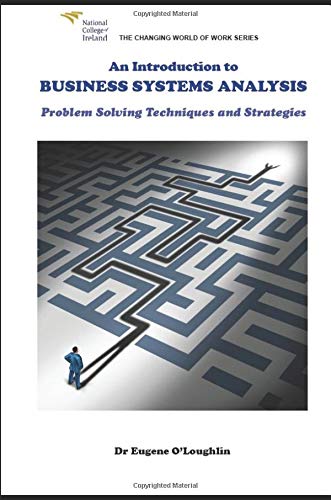
An Introduction to Business Systems Analysis - Republished on Amazon

Since it was first published in 2009, my first book, An Introduction to Business Systems Analysis has sold quite well (though I made very little money from it) - but is now out of print. My original publisher (The Liffey Press) and I have decided that it will no longer be available from the publisher - no new print runs will be done, and I have taken back control of the book.

I have reworked the old version of the book and it is now published directly on Amazon. Even though I got all my old files back from The Liffey Press, it was not as straight-forward as I thought to republish. I got each chapter as a separate file, and had to combine them into a single document using Microsoft Word. I had a lot of difficulty with section breaks and headers, and when I went to publish the Word doc - lots of changes were made in the publishing process (blank pages, wrong page numbers, etc). In the end, I converted the Word document to PDF format and it worked a treat. The book is now available as a print-to-order version - online it looks almost exactly like the old version. I have a proof copy on order to check it out.

With Amazon of course you can also make a book available as an eBook for Kindle. I tried this with my book, but unfortunately it looked dreadful. Many of the tables split up badly - too wide and too long for the Kindle screen. Diagrams also are sometimes missing, or only half are on view. It just simply will not work in the current format - it would have to be completely re-worked for publication on Kindle. I had hoped that the book would be available on Kindle for a low price - but this is not to be. I am therefore reducing the price of the printed version from £25 to £15, and will probably lower it again next year. Amazon gets 40% of the sale price, the author gets 60%. However, the cost of printing is taken out of the author's cut - I expect to get about £2 royalty from every sale. This book is quite cheap to print as it is all in black and white. 

This is my third book that is now published through Amazon. It's nice for an author to think that their books will be available effectively forever after they are out of print. Thank you Amazon!

Monday, December 03, 2018

A Record Week on YouTube

Regular readers of this blog will know that I am not slow to brag highlight notable landmark viewing figures on my YouTube Channel. After a significant fall-off in viewing figures the previous week, due in the main to the Thanksgiving Holiday in the USA, this past week has seen my daily viewing figures record being broken three times. Before Monday last week, the highest viewing figure per day was 13,811 achieved on 19th April last. On Monday, a new record was set with 14,143 views. The next day this record was broken with 14,551, on Wednesday the figure reached 14,726 for a new record that will probably stand until next April (should current trends be followed). Needless to say, it was also a record week (88,039 views), and a record month (340,000 views) - I am also heading for a record year.

As always - I continue to be astonished at these figures. That so many people find my videos useful is amazing and humbling to me. Yes I do also make money from this, but current figures lag behind what I used to make between 2012 and 2015. My statistics videos have shown the most growth, so I think I will plan a few more.

Tuesday, November 27, 2018

Getting that end-of-semester feeling #vlog14

With just two weeks to go to the end of the semester, already I am getting that "end-of" feeling. Some more reflections on teaching a module on-line for the first time...

Monday, November 26, 2018

Thanksgiving Sales Up in USA, but YouTube views down for Eugene #Analytics

According to an article "The Billion-Dollar Holiday" by Statista: Thanksgiving weekend has grown into a huge shopping event that begins with Thanksgiving on Thursday and ends with Cyber Monday. This year's Thanksgiving weekend is expected to shatter online shopping records yet again.  That record-breaking number is forecasted to be $7.8 billion in e-commerce revenue for the U.S. The embedded chart below shows the forecasted sales (in brown) for this year:

Infographic: The Billion-Dollar Holiday | Statista You will find more infographics at Statista


I'm sure a similar trend would now be found in Ireland as the concept of Black Friday and Cyber Monday have firmly taken hold here. 

It's not all good news. As Americans are enjoying their holiday period, less of them are watching videos on my YouTube channel. The number of views rises slowly every week from about the beginning of September to the beginning of December. Thanksgiving always bucks this trend and views in the United States always goes down at this time of year - see chart below. If previous years' trends are to be followed, the number of views will climb again this week after the holiday.

Click/Tap Image to Enlarge.

The line chart above is for the USA only. It is my biggest "market" and Thanksgiving has the most dramatic change in the weekly number of views there. I suspect that as the rest of the World follows suit - views worldwide will decline at this time of year in future. Currently, while there is an overall fall off in Thanksgiving week, it is not as stark as it is in the USA.

Thursday, November 22, 2018

Graduation Day at the National College of Ireland

It's that time of year again when students of NCI graduate at the National Convention Centre. Though I would love to be there, unfortunately a clash with classes (for next year's graduates) prevents me from attending.

Graduation marks achievement no matter what level the award is being made. Every single graduate today should be proud of this achievement. It takes hard work and dedication to get to this milestone in a student's life. Many of NCI's graduates are mature students, some who have come back to education after many years. Many have doubts at the beginning of their course as to whether they can complete it. But after many late nights, stress, anxiety, assignments, exams, study - they have finally arrived at the big day. It is no exaggeration to say that I have seen students' lives change over their education journey at NCI.

I would like to wish all NCI students graduating today many congratulations - especially students on the following programmes:
  • Higher Diploma in Data Analytics
  • BSc in Technology Management
  • BSc in Computing
  • BSc in Business Information Systems
  • Higher Certificate in Computing
  • MSc in Data Analytics

Have a great celebration today, and I hope that one day our paths will cross again.

Changing Lives Through Education

Wednesday, November 14, 2018

8 weeks done, 4 weeks to go #vlog13

At the two thirds way through the semester, here are some more reflections on teaching a module (Programming for Big Data) on-line for the first time:

Monday, November 12, 2018

YouTube Landmark #17000000 #Analytics

This morning I note that my YouTube channel has passed 17 million views (17,007,244 to be precise). As always, I am delighted and humbled whenever I hit a landmark figure like this and that so many people over the last 11 years have found my videos useful. 


The trend in growth of views is now firmly on an upward track following the disaster of May 2015 when I changed metadata for each video. If this trend continues, I can expect the number of daily views to continue to rise for about another 2-3 weeks, and then to drop sharply during the Christmas/New Year holiday period as in previous years. For 2018 the overall figure is approaching 3,000,000 for the year, which will be a first - last year the figure was 2,920,414 views.

My statistics videos have become more popular over the past two years, and this has undoubtedly helped growth. During this week I'll put up some more analytics from the channel - Google/YouTube are now providing more tools to gain insights into these figures.

Sunday, November 11, 2018

Tribute to my Great-grandfather James Burns #PoppyDay

I wonder what my great-grandfather James Burns/Byrne was thinking this time 100 years ago. As far as we know in the family, he joined up in 1914, was gassed at the Somme in 1916, and survived the war to Armistice Day. We know that he probably had PTSD as he was apparently violent on returning home. He died in a mental asylum in 1925. However, despite lots of trawling through available records, and a professional search, - I have not been able to find his military record. It would have been easier to find him if he had been killed.

A hundred years ago there must have been great relief at being alive and that the war was over. For those like James, who had served throughout the war - the horrors were over at last. How was he perceived along with other returning soldiers to his home in Lorrha in North Tipperary? 

In the photo below I am holding a British Legion wooden cross purchased at the Thiepval Memorial shop in France last year. I brought it home and keep it as a memento of and a tribute to my great-grandfather. Rest in peace.


Thursday, November 08, 2018

New Data Analytics Certifications from @ainsdublin #analytics

At the National Analytics Conference held in the Mansion House this week, the Analytics Institute (of which I am a member) launched six new data analytics certifications:
  • Management Diploma in Data Analytics
  • Certified Data Scientist
  • Certified Data Application Engineer
  • Certified Business Data Analyst
  • Certified Data Analytics Professional
  • Certified Data Engineer
The Analytics Institute stated that they are definitely not in the training business. Training for each certification (if needed) is provided separately by Coursera. There is also the option to "Submit Qualifications & Experience", and to include "CV, Linked In Profile, Portfolio, Awards", instead of taking the Coursera courses. Coursera charge €42/month for their courses, and the Analytics Institute "Certification Fee" on top of this is €379. Once training and/or profile information is provided, the Analytics Institute "Certification Committee" will review each application to ensure its "standards are fully met". The Institute does point out that their certifications are not academic qualifications, but that it follows the EDISON Data Science Framework instead.

I wish this initiative well - anything that improves the standards of data analysis is most welcome by me. Partnering with Coursera sounds like a good idea, but why pay a second fee to to one body while training with another? It will be interesting to see how this works out. Data analysts/scientists who already have a qualification might see this as a useful add-on to their CVs. Others who are working or have a lot of experience in this space, but who do not have a formal qualification, are possibly the main audience for this initiative. 

Monday, November 05, 2018

Back in Action #vlog12

After a two week break since my last on-line class following the College-wide reading week, it is back to normal with my next online class. Today's reflective video is about some thoughts on the break and looking forward to the rest of the semester....

Friday, November 02, 2018

Reading Week

60 tests - today's work.
It's Friday of Reading Week - this year it is the 7th week and falls exactly half-way in the semester. Time to catch-up? Take a break? Do research? Plan for the remaining 6 weeks? Try something new? There's lots of things I could do during this time - so what did I use this break in the semester for?

The first thing to note is that our Reading Week always has a Bank Holiday in it - this time it's the October Monday. A four day week - 20% less time than normal. I have spent this week so far doing three things: grading continuous assessments, updating content for one of my modules, and preparing exam papers. These jobs will have had to have been done anyway this week - thank goodness I didn't have any classes to "get in the way". Today I have 60 tests to grade - I won't get through this lot in a day, but I hope to get a huge number done so that I can easily finish next week.

I have 12 hours of class contact time in a week. This leaves 23 hours left out of the theoretical 35 hours a week that I am supposed to work. I have met very few lecturers who work less than 35 hours a week - in this line of work, 40-45+ hours a week during term time is extremely common. I have 140+ students this semester - that's a lot of grading of continuous assessment to do. Classes have to be prepared, and student queries through email/phone/call to office have to be dealt with. Some colleagues use the opportunity to use up annual leave days. A Reading Week is most welcome to clear grading from the first 6 weeks, and to set up the second 6 weeks of the semester nicely.

I often wonder what use students put this Reading Week too. I'm sure there are some who welcome the break from classes - some of my students have 16 hours of classes every second week. I know that many work on projects, revise what has already been covered, and yes - take a break. The concept of taking a break in the middle of a long 12 week semester is a good one in my view - though I think calling it a "Reading Week" is a bit misleading. "Mid-term break" would be more accurate.

Friday, October 26, 2018

Michael D, he’ll do for me

Today I voted for Michael D Higgins to be our next President of Ireland. I didn’t vote for him in 2011 (I voted for David Norris), but am more than happy to do this time. He has been an excellent President in my view - more of the same will do for me. Like many people I am fed up of the circus that the nomination process and the election has become. Election Yes, celebrity candidates No. I really hope the next one in 7 years time is between politicians - back to normal.

He also wrote a letter to my Mum and Dad to congratulate them on their 60th Wedding Anniversary - you can’t get more presidential than that!!!

Image source: Wikipedia.

Thursday, October 25, 2018

From Hedge Schools, to Blue Schools, to Prefabs, to Western Building Systems #education

Me in National School 1964.
A few weeks ago I wrote about hedge schools and blue schools - 200 years ago - education facilities looked a lot different!. I also wondered what teachers from 200 years ago would think of educational facilities today. They say that if you take a person from hundreds of years ago via a time machine to today, there are only two things they would recognise: churches, and schools. Today, our new Minister for Education, Joe McHugh, has warned that More schools are set to close amid safety concerns, following revelations that Ardgillan Community College in Balbriggan, has shut 18 classrooms this week due to "structural issues". 42 more schools are to be inspected. This of course is severely disruptive to students and teachers alike. No one wants to work in an unsafe environment, and shame on the builders, Western Building Systems, if they have constructed an unsafe school that puts our children in any danger.

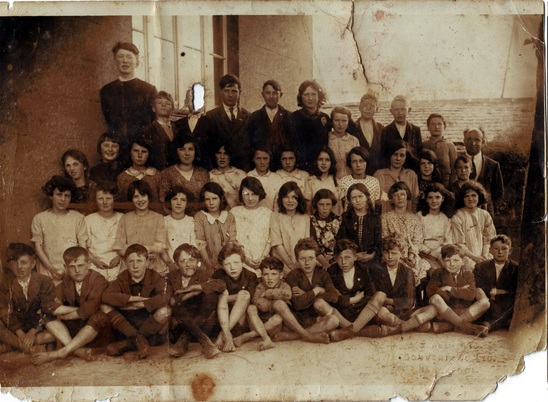
Health and Safety didn't really exist when I started in Carnew National School in 1964. The school was built in 1958 and was still very new at the time. While no one obviously made our classroom unsafe, it was probably state-of-the-art for the 1950s. This building still stands today, though has been greatly extended. I spent all of 2nd and 3rd class (1967 to 1969) in newly added pre-fab buildings. I do recall them being cold, but I don't think my education was affected by being in an inferior building. Less than 100 years ago, some pupils attended school in their bare feet - see photo below from Carnew Historical Society's Gallery page (I'm guessing from 1920s or 1930s):

Image source: Carnew Historical Society.

Children can be educated anywhere. It's a shame that we have to close schools because of "structural issues" - that's what we get for using the lowest bidder. When we think of what many students had to endure in times past, it's a wonder that any education took place at all. 

Monday, October 22, 2018

60 Years Ago Joe and Phil were wed

On Wednesday October 22nd 1958 my mother and father, Phil Byrne from Gorey and Joe O'Loughlin from Carnew, were married in Saints Alphonsus and Columba Church in Ballybrack, Co Dublin. The celebrant was my father's uncle - Monsignor Charles Hurley (also parish priest of Ballybrack at that time). Today they are celebrating their Diamond Wedding Anniversary.

A Diamond Wedding Anniversary is a rare thing - my parents must be as old as the hills! As people are marrying a lot later nowadays, if at all, I think that it will be a rarer event in peoples lives. The O'Loughlin family will be celebrating this remarkable achievement next Saturday when Joe and Phil's family, neighbours, and friends will get together to raise a toast to this remarkable couple.

1958 was a dreary time in Ireland, it was made even drearier in October 1958 as the whole place was in mourning after the death of Pope Pius XII. Emigration was rampant - most of my Mum's family missed the wedding as they had sailed for a new life in Canada just months before her big day. I'm sure they could not have even imagined what the world would look like 60 years later - my Mum and Dad are probably reading this post on Facebook! 1958 was brightened up for the O'Loughlin and Byrne families on Phil and Joe's big day -  may they have many more for us to help them celebrate!

To sing us out, here is the Emerald Folk Group from Wexford singing The Golden Jubilee about a couple celebrating their 50th Wedding Anniversary. Just substitute the words "Diamond" for "Golden", "Phil and Joe" for "Kate and Pat", and the number "60" for "50" - and sing along!

Tuesday, October 16, 2018

A Torrid Time with On-line Assessment #vlog11

Oh dear - I tried an on-line test for the first time last evening which did not quite work out as planned. Here's my reflection and some thoughts on this...

Tuesday, October 09, 2018

Hiccups and Reflections on On-line Teaching #vlog10

Week 4 has now passed - a third of the way through the semester. Hiccups are still happening and causing me some frustration. here are some reflections on last evening's class...

Wednesday, October 03, 2018

200 years ago - education facilities looked a lot different! #BlueSchool

Last weekend while driving from Carnew (in Co Wicklow) to Camolin (in Co Wexford) I came across an interesting set of ruins at the side of the road near Askamore, and stopped to see what it was. It turns out that these ruins were the remains of what were termed as "Blue Schools" - only about a metre high wall remains if what was once a two-roomed school. A sign at the site tells us that this was one of five schools in the parish of Askamore. In 1825 there were 36 pupils attending this school - 34 Protestants, and 2 Catholics. Some of the other four schools were "hedge or pay schools" - in all there were 230 pupils attending the five schools. The one below is called a Blue School. These were intended for poor and/or orphaned Protestant children - this one was built under the patronage of Earl Fitzwilliam of the nearby Coolattin Estate.

I stood on the walls and wondered what it must have been like for the 36 pupils attending this school. Their teacher was Mr James Hall, who earned seven pounds (£7) a year. The school cost fifty pounds (£50) to build - very simple construction as you can see below.


I wondered what the classroom looked like in 1825 - did the pupils have seats and desks? Did they have paper and pen, or did they use chalk and slate. Was there enough for everybody? Did Mr Hall have a modern blackboard (which was only invented in 1801)? Certainly the conditions would have been very crowded, but these students were lucky to have a roof over their heads. Did any of the 1825 pupils go on to greater things? Who knows!

Certainly, education in 1825 was a lot different. Compare this to an article in yesterday's Guardian newspaper where Donna Ferguson writes (quoting a teacher): "I will never return to teach in England" as up to 15,000 teachers in England are "snapped up overseas each year, driven away by the stress in British school". I do not wish to belittle the lot of teachers, but many cite huge workloads, low pay, stress and other health issues, long hours, and better opportunities abroad. I wonder what Mr Hall would have thought?

Tuesday, October 02, 2018

Further Reflections on On-line Teaching #vlog09

A quarter of the way through the semester - some further thoughts and reflections on my experience of teaching an on-line module for the first time:

Friday, September 28, 2018

Some Advice for On-line Educators Part II - "Don't Lecture"! via @MFPaulsen

Following up from my post earlier this week where I mentioned some advice given in a 2003 book by Professor Morten Flate Paulsen, comes some further pedagogical recommendations from Prof Paulsen. These are based on surveys he conducted in Scandinavian countries in the late 1990s and early 2000s - still relevant today I think:

  • Have Clear Objectives
  • Maintain as Much Flexibility as You Can
  • Encourage Participation
  • Maintain a Non-authoritarian Style
  • Be Objective
  • Don't Expect Too Much
  • Don't Rely on Offline Materials
  • Promote Private Conversations as well as those in the conference
  • Find Unifying Threads
  • Use Simple Assignments
  • Make The Material Relevant
  • Required Contributions
  • Present Conflicting Opinions
  • Invite Visiting Experts
  • Don't Lecture
  • Request Responses

Most educators will agree that the points above will probably apply in all educational settings, but I am drawn first to two (which are highlighted above).


Maintain a Non-authoritarian Style
Prof Paulsen suggests that it is "usually better to avoid the "authority figure" role when teaching online, especially with adults". There is no doubt about it, but already I feel as if I have total control in my new on-line classes - in Adobe Connect (the tool we use to deliver live classes) I am the "Host", while the students are "Participants". It's hard not to be "authoritarian" in such an environment. I have not yet grasped the system where control can be handed over to students - I need to get more comfortable and relaxed with Adobe Connect before I start giving control (authority) to students. Perhaps it shouldn't, but being a teacher in any learning environment does convey a certain natural authority - it's hard to overcome this in my experience.

Don't Lecture
My job title is "Lecturer in Computing". I am a Lecturer and it is hard to swallow a "Don't Lecture" recommendation. However, Prof Paulsen tells us that "Experience strongly suggests that a long, elaborate, logically coherent sequence of comments yields silence. Instead, use open-ended remarks, examples, and weaving to elicit comment and other views". I have certainly already adapted the "weaving" approach. My timetable says that I start with a two hour lecture, and follow this with a one hour tutorial. I never stick to this restriction, and I like weave in and out of short lecture/talk and practice. This is relatively easy to do in a module on Programming, where students are writing code almost all the time in my classes. For the first two weeks, I went through neither of the sets of lecture notes (PowerPoint slides) - I only dipped in and out when needed. I hope to keep this up. One of the best courses I ever attended was a CIPD Train-the-Trainer course. Our Lecturer/Trainer gave us a printed copy of her PowerPoint slides at the end of the 10 day course - we didn't even know they existed!

Thursday, September 27, 2018

Watching Recordings of My Class - Ugh! #vlog08

As my new on-line classes are recorded, I took some time this week to watch and listen to my own class recording. It was not what I expected...!

Tuesday, September 25, 2018

Monday, September 24, 2018

Some Advice for On-line Educators Part I via @MFPaulsen

Image source:
informationr.net.
Now that I am heading into my second week as an on-line educator, I am reminded of some great advice from Professor Morten Flate Paulsen given many years ago that still stands today. In his book "Online Education and Learning Management Systems" (published in 2003) - Paulsen tells us: 

What distinguishes online instruction from entertainment
or recreation is the purposefulness of the designers
and developers in provoking certain intelligent
responses to the learning materials, context,
and environment.

I like the choice of words like "purposefulness" and "provoking", and the distinction of on-line learning from "entertainment". In 2003 when these words were written, there was no YouTube or Netflix - online entertainment was in its infancy. Today - it is mainstream, and it is more important than ever to keep this distinction visible to educators and students. I have often heard lecturers say that they are teachers - not entertainers. At the same time I appreciate that (as in my classes) participating in an on-line class for three hours is a long time. I try to be light hearted at times, but there is serious work to be done. I have yet to figure out how to do "purposefulness" and be "provoking" in my on-line class, but it is certainly something I think all on-line educators should take on board. 

Paulsen also recommended:

When developing and delivering instruction,
whether online or not, the use of technology is secondary
to well-designed learning goals and objectives.

The emphasis on the word "secondary" is mine. It's too easy to get carried away with the technology. In last week's class I had three computer screens, plus lots of applications open. I felt like I was in a sound studio. I'm decreasing to two for tonight's class and will see how I get on. I also found my screens very cluttered - too much going on. Adobe Connect is a brilliant tool, but it cannot replace "well-designed learning goals and objectives". I am a firm believer that goals and objectives will be subtly different for an on-line class compared to a classroom. While the overall module Learning Outcomes should be the same, the delivery and content should be developed with the on-line environment in mind. Simply reproducing lectures notes used in the classroom on-line does not work well in my view. How can module material (eg slides) developed for on environment (the classroom) be unchanged for a different environment (on-line)? Many educators believe they are interchangeable and soldier on regardless. The module (Programming for Big Data) that I am teaching is not being delivered by me in a classroom (it is being by others) - so it will be interesting to compare experiences at the end of the semester.

Thursday, September 20, 2018

Are you ready? #elearning #cisco

In late 1999/early 2000, in just Cisco's second wave of brand advertising they asked the question:

Over 70 million people are receiving an education on the Internet this year.
One day, training for every job on Earth will be available on the Internet.
Are you ready?

At this time I was working in Global Services in SmartForce, and quotes such as this were manna from heaven for a company that sold eLearning content in what was then the very early days of on-line education. I recall a lot of technical issues compounded by the Y2K phenomenon in delivering training content over the Internet. Most companies still purchased their content from SmartForce via CD-ROM - at the time many were just not equipped with fast Internet connections.

Almost 19 years later I feel the same question can still be asked. Millions of people are learning on-line (over 16 million people have watched my videos alone). This year I am finally involved in delivering a course on-line - but this is to just 35 students out of over 100 that I am teaching this semester. Most of our College students still come to the classroom - but the on-line figures are growing. YouTube, which did not exist in the year 2000, has become the "Go To" location for learning anything from Maths, to fixing a tire, to removing contact lenses, or to learning a programming language. While this can be regarded as informal learning (it cannot be tracked or certified), it is taking a much increased proportion of the time that people take for learning.

We have not yet reached "training for every job on Earth" being "available on the Internet" - otherwise classrooms everywhere would not be required. Having delivered a class on-line for the first time ever this week I feel that while Cisco's advertising question "Are you ready" is getting closer to a "Yes" answer - we still have a long way to go for this prediction to come through.

Tuesday, September 18, 2018

Monday, September 17, 2018

Sunday, September 16, 2018

Weekend in Amsterdam #Learning

Amsterdam is just 1 hour and 20 minutes flight time from Dublin - but this weekend is my first ever visit (not counting an airport stopover) to this wonderful city. I can't believe it has taken me over 58 years to finally decide to visit the largest city in The Netherlands. It is always wonderful to experience and learn from other cultures. We have so mush in common, yet there are so many differences. The English language is very common everywhere - we were greeted in English and spoken to in English all the time. In fact, I don't recall anyone greeting or talking to us in Dutch. In several of the places we went, signs were in English only - I wonder what the Dutch think of this?


Canals of course are everywhere - we took an evening cruise, but this was not particularly interesting as you will miss a lot in the dark. One thing I will remember it for is the Worst Pizza Ever, which was served up to us on the barge. Other highlights included a visit to the (very) crowded Anne Frank's house, the Red Light District, the Heineken Experience, the Rijks Museum, Rembrandt's House, and finally the Jewish Museum and Holocaust Memorial. References to the Holocaust are very matter-of-fact - over 104,000 Jews were transported from The Netherlands to death camps. In Anne Frank's house there is not actually that much to see - but being in the same rooms that this wonderful writer hid in for two years before her own death in Bergen-Belsen concentration camp was an eerie feeling. I've experienced it before at the Holocaust Memorial in Berlin the almost complete silence that visitors to the museum wonder around in. Contrast this to the noisy Rijks Museum.

Amsterdam for the most part seems to be a city of young people, with a lot of them cycling around all the time. Bicycles are everywhere, and I was interested to learn that smaller motorcycles can go in the cycle lanes. No helmets are required on smaller scooters - though I saw plenty on bigger ones not wearing helmets either. I didn't sample any of the head shops that are everywhere - I was not keen to learn about being stoned! I'd love to go back - a weekend is not enough time to enjoy this city. Below is our Heineken Karaoke Experience - "Tulips in Amsterdam"!


Friday, September 07, 2018

Training for on-line class delivery finished! #vlog04

Last training session with ET was today - hopefully I'm ready for first class next Monday week - here's my latest video diary:

Monday, September 03, 2018

All-Ireland Football Finals Winning Margins (1892-2018) #Analytics #GAA

Yesterday's All-Ireland Final winning margin between Dublin and Tyrone of 6 points was the biggest since 2007 when Kerry beat Cork by 10 points. In 132 All-Ireland finals*, this was only the 10th time the winning margin was 6 points. Many football fans (me included) expected a bigger margin as the Dubs have been rampant this year. But a closer look at the winning margins since 1892 shows that overall the margins are quite small - the vast majority of finals are won by 4 points or less.

Click/Tap Image to Enlarge.
Data Source: Wikipedia.
The most common winning margin is 3 points (22 times), followed by 1 point (20 times) and 4 points (19 times). My €5 bet @ 7/2 with Paddy Power yesterday that Dublin would win by 1-3 points looked a good bet on the balance of probability. As you can see on the chart above, huge winning margins are rare. The biggest winning margin ever of 19 points was Cork's 6-6 to 1-2 win over Antrim in 1930. In more recent times Kerry's 5-11 to Dublin's 0-9 (17 points) was the biggest winning margin since Mayo's 18 point win over Laois (4-11 to 0-5) in 1936.

One point margins are common (20 times), though incredibly five of these occurred in the past nine finals. Unlucky for Mayo as they have lost three finals (2013, 2016, and 2017) by the minimum amount - all to Dublin.

So - if you like a bet on things like winning margins, be sure to look at the probabilities as well as checking on a team's form before you part with your money. In the long run, betting on winning margins of 1-4 points will pay off.

*Finals between 1887 and 1891 not counted as a goal was then worth 5 points.