Sunday, December 01, 2013

The Thanksgiving and Black Friday effect on @YouTube #analytics

First - I hope all Americans enjoyed the Thanksgiving holiday and enjoyed Black Friday too!

The First Thanksgiving
Image source: Wikimedia Commons.
The Learn with Dr Eugene O'Loughlin YouTube Channel is viewed by more Americans than by any other nationality. Since the channel was created, 1,520,896 of the total views (3,871,335) were from the United States according to YouTube Analytics - that's 39%. The next highest countries are the UK (11%), Canada (5.6%), and India (5.1%). Incidentally, Ireland accounts for only 1.3% of total views. So - any time the Americans have a holiday, there is a significant effect on the viewing figures. To show the effect on the learning and YouTube analytics I thought I'd share the figures for Thanksgiving here.

On Thursday 21st November, a week before Thanksgiving, 4,679 Americans tuned in to my videos - this is one of the highest daily totals from America ever on the channel. A week later on Thanksgiving Day, the figure dropped to just 999 - I guess that a delicious turkey meal with family and friends beats learning how to create a Gantt chart in Excel! On Friday 22nd November, 3,171 Americans tuned in - a week later on Black Friday the figure had dropped to 1,826. The line chart below (last two dots are Thanksgiving Day and Black Friday) shows a visual of these data:


Many thanks to the 2,825 Americans who got up from the Thanksgiving table and skipped shopping on Black Friday to learn something from my channel. Here's a breakdown of the number of views from the top 20 States for both days:

California
362 (13.0%)
Texas
226 (8.0%)
Florida
214 (7.6%)
New York
195 (6.9%)
Illinois
122 (4.3%)
Pennsylvania
105 (3.7%)
Georgia
98 (3.5%)
New Jersey
98 (3.5%)
Virginia
97 (3.4%)
North Carolina
91 (3.2%)
Massachusetts
81 (2.9%)
Ohio
72 (2.5%)
Michigan
68 (2.4%)
Arizona
66 (2.3%)
Maryland
66 (2.3%)
Minnesota
55 (1.9%)
Washington
53 (1.9%)
Indiana
52 (1.8%)
Colorado
50 (1.8%)
Wisconsin
49 (1.7%)

All data from YouTube Analytics as of 1st December, 2013.

The lowest figures were two each from Wyoming and Vermont. As far as I know, YouTube figure out where you are from by your computer's IP address, so these data above should be reasonably accurate. Also according to YouTube, 44% of these views were from people in the 44-54 years old age group. I know this to be a less accurate estimate as profiling is used in part to determine age.

God Bless America, and Keep Learning!

Saturday, November 30, 2013

Some People Just Don't Get It. #FatSalaries #FatCats #FatTopUps

News this week of top-ups from charity fund-raising being used to top up senior manager's already fat salaries makes our collective Irish blood boil. To me it's not just that the likes of senior management in hospitals and healthcare facilities (like the CRC) are on already on inflated salaries funded by the State, or that their top-ups were taken from charity funds - it that after five years of economic recession and austerity there are still people who are creaming it in Ireland.

Image source: Grand Strategy.
According to The Irish Times (28th November, 2013), the Central Remedial Clinic paid one of its Chief Executive Officers an annual salary of €106,900. This is a pretty good salary - I wish I was on it! But this was topped up "with funds from the clinic totalling €136,000" to give a total pay package of "more than €240,000". Many other examples have been reported in the media - the people concerned should be ashamed of themselves.

Now, I don't begrudge anyone earning big money, but I don't believe in the "If you pay peanuts, you get monkeys" idea either. Similarly, I would not advocate a Cuban style same wages for everybody approach. But when the wages are being paid out of the public purse - this is different. If you feel you deserve a big salary, try the private sector. Health services are being cut everywhere, but wages are still inflated and now exposed as being topped up. This stinks. Some people get rich while others have to wait for basic services.

As for our politicians who are (rightly) up in arms over this, there is a whiff of the pot calling the kettle black. Tánaiste Eamon Gilmore guffed at the Labour Party Conference that if "agencies don’t comply" with government guidelines on salaries that a way will be found to reduce "their funding correspondingly". Eamon Gilmore is on a salary of €184,405 plus plenty of expenses. It's not fair to single him out - there's many more like him in politics, plus of course the banks (which we own too). 

Jaysus!

Wednesday, November 27, 2013

Academic Freedom to Blog - via @ChrisParrTHE

Chris Parr comments in the Times Higher Education that many "university employees like to blog". He says that academics like to do this "to gather their thoughts in one place, pass comment on current affairs, or vent their frustration at the annoyances of everyday life". Though I am not a University employee, I do work as a Lecturer at third-level at the National College of Ireland (NCI). In his comment, Parr describes a situation where academics got into a bit of bother at the Chicago State University over using the College's brand and name in their blog.

Image source: Tenured Radical.
As a so-called academic myself I of course support academic freedom, and I'm glad to say that there is a healthy attitude to this at NCI. Very few of the academics at NCI blog (I'm only aware of one colleague that does), but it is common among academics of other colleges - three of my favourites are Stephen Kinsella (UL), Brian Lucey (TCD), and Karl Whelan (UCD). There is no restriction on my blogging by NCI - I have never been asked to modify or delete any of my 1,000+ posts. It is really cool to be able to take time during working hours and feel free to write a blog post on educational matters. For non-educational matters I tend to write posts at home (as I am now doing), or during a break.

I am of course careful in what I write so that I do not invite comment from College management. Even when I feel critical of College activities I self-censor myself and hold back, sometimes with great difficulty. In this way I have a self imposed control of my own Academic Freedom. But if others want to go further I support their freedom to do so. In the video below, students and faculty of Florida Atlantic University are protesting about academic freedom in a case where a professor stood on a piece of paper with the word "Jesus" written on it. As a Christian myself I think this action is a bit silly, but the professor involved should not be censured for expressing an opinion. Long Live Academic Freedom!

Sunday, November 24, 2013

"Bing Video Search, YouTube, and From a Video Embed Code" still missing from Microsoft @Office365

The now long running problem with embedding YouTube videos into Microsoft PowerPoint presentations seems to have no resolution in sight. On Microsoft's support page article "You can't embed an online video in a PowerPoint 2013 presentation", at least Microsoft acknowledge that there is a problem and point the finger at Google: 

"Due to changes in the YouTube service, PowerPoint 2013 is currently unable to support Youtube videos. Microsoft is currently investigating potential fixes to this feature".

Image source: Interactive.
This update is dated 20th November 2013. This problem first started to occur in the early summer this year and I can't believe that Microsoft's programmers can't sort this out within a few minutes. In the statement above I smell a legal issue ("changes in the YouTube service"), but this does not make sense as you can easily work around this by using PowerPoint's Developer Tools (see my video how to do this here). This work around uses a modified URL, but the method referred to above uses embed code. Maybe it's legal to use one, but not the other? 

In any event, I wish this could get sorted. Tom Warren, writing in The Verge last May, replicates a "cease and desist" letter (see below) from Google to Microsoft in a row over the YouTube App on the Windows phone. While these two kids fight over this, the rest of us are kept waiting. Grrrr!

Friday, November 22, 2013

Semester Fatigue - Another View

My post of last Tuesday on Semester Fatigue has attracted a few more views (213 views in 3 days) than my normal posts, and is today at #16 in the top 20 "Top Stories" on the Ninth Level Ireland website. I also received a few likes and comments. Today I read another view, "End of semester fatigue – an honest reflection", posted on the Canadian based Institute for Learning and Teaching website.

In the post, the anonymous science instructor reports that his students "are tired, struggling to take in the new material they are learning and to keep up with the relentless pace of their second year science courses", and that his "classes, which are usually filled with questions, observations and jokes from the students are slowly becoming less and less interactive". The instructor has found that he/she is "mirroring these changes", and that he/she would "love to slow down the pace and end these courses by pleasantly coasting through the last few lectures". I feel this guy's fatigue! The article also contains some interesting observations that this instructor made when observing a colleague who mixed short "chunks" of lectures with a "carefully chosen problem" in order to maintain student interest.

Image Source: Lindsredding.com.
While I was a student myself in Trinity College (class of 1983), the academic year was divided into three terms - two of 8 weeks each and one of six weeks. I think this makes more sense than the two 14-week semesters that we currently have at my College, and in other colleges. Yes - we do have a reading week in the middle when there are no classes, but only for some students. 

I do feel that the light at the end of the semester tunnel is getting closer, but we have three weeks still to go in which I will be covering material in class that will be assessed in the end of semester exams. There's no let up despite the lengthy semester, so it's full steam ahead until December 15th!


Thursday, November 21, 2013

Reorganization of YouTube Playlists

As the volume of videos on my Learning with Dr Eugene O'Loughlin I have re-arranged the Playlists to better reflect the different types of videos on the channel. My Playlist selection is now as follows:

  • Basic Statistics in Excel 2010
  • How To... Word 2003
  • How To... Word 2010
  • How To... Excel 2003
  • How To... Excel 2010
  • How To... Excel 2013
  • How To... Powerpoint 2003
  • How To... PowerPoint 2010
  • How To... PowerPoint 2013
  • How To... Moodle
  • Problem-Solving Techniques
                   
Image source: Wikimedia Commons.

One of my viewers also suggested this to me and of course YouTube have plans to create courses out of playlists in the near future (with edX I think). Some videos are in more than one playlist, and I hope to grow above list to shortly include videos on more Microsoft Office 365 tools.

Despite this, most of the channel's video views are not through either the channel page or though the previous playlists. Only 0.6% (23,347) and 0.1% (2,187) of 3,800,742 views are via the channel and playlists respectively. So I don't expect the above change to do anything very much to improve viewing numbers, but it will help me to be a bit more organized.

Tuesday, November 19, 2013

Semester Fatigue

It's week 11 of our 14 week semester at the National College of Ireland and I feel and detect an element of fatigue setting in amongst students and staff. We have had ten long weeks of classes, assignments, projects, as well as corrections. For most people at this stage, the end of the semester can't come quick enough. The holiday season is coming and exams in January seem a long way off. I feel myself getting a little fatigued, but there is still three weeks to go. Absenteeism by students and their leaving class early increases at this time every year - it's no wonder after the 11 week effort that they have put in. This is also (in my experience) a risky time for drop-outs to occur.

For academics, we can take some advice on "Work Life Balance" from Franklin University, who recommend five ways to avoid academic fatigue. These are: 
  1. Take care of your physical body. Eat right. Sleep well. Breathe deep. Get some exercise. Hydrate enough. A little self-care goes a long way.
  2. Pick your peak time. Do the hard stuff when you’re at your sharpest. That may be 4 a.m. or 3 p.m. Everybody’s different. 
  3. Learn to let go. Sometimes you can’t do it all. Remember, work is infinite but time is finite. There’s always more to do. And there are only 24 hours in a day. 
  4. Give yourself a break. Long hours don’t necessarily equate to productivity. While seemingly contrary, a short or long break can boost productivity. 
  5. Reboot. A nap. A walk. A snack. Everyone has something that re-energizes them. Find what works for you and build it into your day. 
Image source: Franklin University.
Some good advice here, but I'm sure we all ignore some of this advice at least some of the time - for example I don't exercise much and never take naps. For me, I believe taking a break is the most important (or "Sharpen the Saw" as Stephen Covey called it) - especially a break between activities (ABBA). Even if is is just taking a glance at headlines on a news website, or checking personal email for a few minutes, or reading a report on last night's match - it is better than going straight from one activity to another.

There is something for everyone in the advice above and at this time in the semester it is important to keep both the energy and enthusiasm levels up. Students are relying on us even though they may be fatigued themselves.

So cheer up everybody - there's only three weeks to go before the the end of the Semester!

Sunday, November 17, 2013

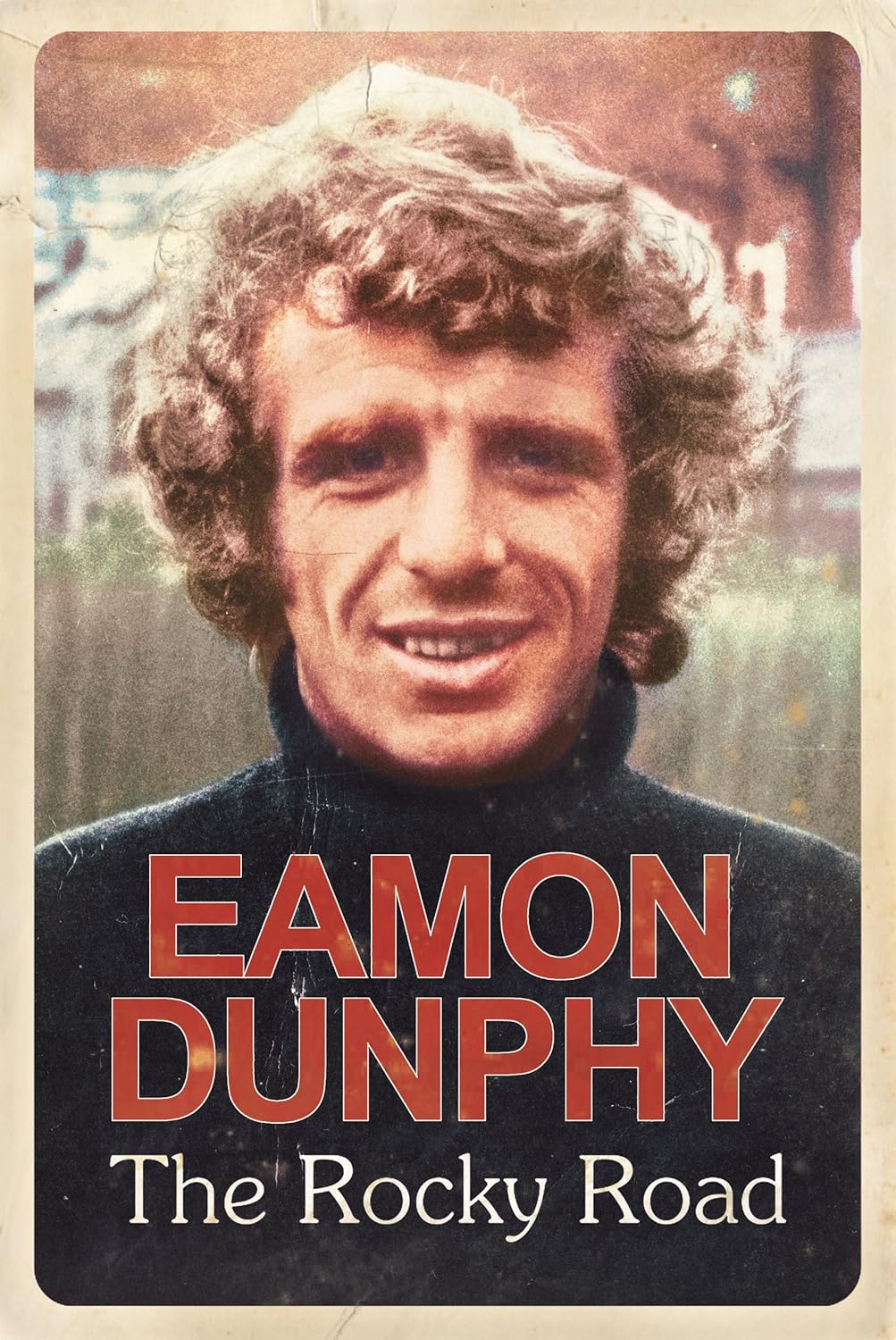
Book Review: "The Rocky Road" by Eamon Dunphy

I have always liked Eamon Dunphy as a TV pundit. I don't always agree with what he says, but I find him a passionate and fascinating character when it comes to football. Watching football on TV over the past 20 years would have been much duller without his participation in TVs best trio of football pundits - John Giles, Liam Brady, and Dunphy. You can always be sure that even if the football is poor, the chat before, at half-time, and after would be exciting. He always called it as he saw it - so when I saw his new autobiography I just had to purchase it straight away. I once said "hello" to him in a shop in Donnybrook when he was buying cigarettes (Sweet Afton), and I think I once saw him play for Shamrock Rovers against Limerick in the late 1970s.

Image source: Amazon.
The Rocky Road deals with Dunphy and his life up to the World Cup in 1990. For football fans of English and Irish football it is a fascinating account of a self-confessed journey man who signed for Manchester United as a boy, but played all his football in the lower English leagues, finishing up in the League of Ireland. His account of life as a footballer playing for York City, Reading, and Millwall is by far the best part of the book for a football fan. His time at Shamrock Rovers was brief and not as interesting, but it does offer an insight into the attempt by him, John Giles, and Ray Treacy to instil some life into the League of Ireland.

His time as an international footballer was far from the glory days of Euro 1988, Italia 1990, USA 1994, and Japan-Korea 2002. His hard hitting accounts of how Irish football was run by "suits", while bitter, show that his passion was football and that he hated seeing it taking a back seat to the junkets and goodies that surrounded the international game.

The controversies with Jack Charlton are well known, and are well aired by Dunphy in the book. He does admit that he was not always right and that his major regret was the effect that it all had on his family. The last paragraph of the book must have been difficult for him to write. There is very little personal material in the book - no account of dating, getting married, birth of his kids - in fact they are barely mentioned at all. What does get a mention is some serious name dropping by Dunphy at every opportunity, for example on page 331 Ruari Quinn is mentioned once for no reason at all. 

Overall - and I can't resist this: It's a good book, not a great book!

Friday, November 15, 2013

"How To...Create a Basic Gantt Chart in Excel 2010" reaches half a million views on @YouTube! #wow #analytics

The Learn with Dr Eugene O'Loughlin YouTube Channel has reached another landmark today as one of the videos has passed the 500,000 views mark. This is a WOW moment for me and I did not for one second think that so many people would view this video when I first posted it on 4th January 2011 last. As I write, the video today has 505,782 views. There are similar videos on how to create Gantt charts in Excel versions 2003 and 2013. The combined total of views for all three Gantt chart videos is 621,601 views - WOW again! A BIG THANK YOU to all my viewers!

Some data on the "How To...Create a Basic Gantt Chart in Excel 2010" video since it was posted:

  • 505,782 views
  • 2,525 Likes
  • 51 Dislikes
  • 523 comments
  • 118 shares
  • 744 Favourites added
  • 497 subscribers
  • 157,811 views from the United States
  • 27,129 views from Ireland
  • 2 views each from Togo, St Helena, Eritrea, and San Marino
  • 65% Male, 35% Female
  • 1,456,750 estimated minutes watched (since 01-SEP-2012) = 2 years, 281 days
  • €**** Total estimated earnings ;-)


Here's the landmark video:


Monday, November 11, 2013

How To... Display a Range of Descriptive Statistics in Excel 2010

Over the past year since we developed and started the new Higher Diploma in Data Analytics at the National College of Ireland I have been in many discussions about what is the best tool to use when analysing data, especially "Big Data". Some say the R or Python programming languages, others say SAS Software or IBM's SPSS, and I know there are many other tools available as well. One common theme though is that many people still ask "Can I get that in Excel?". It's still probably the most popular tool for analysing data and of course it is far more commonly used than any other as it is on most of our desktops.

Excel has become a great tool for analysing data. You can perform all the basic descriptive statistics calculations, and can carry out many of the inferential statistics calculations such as ANOVA, t-tests, regression, etc. I accidentally came across the "Descriptive Statistics" option in the Data Analysis tool and checked it out. It calculates 12 statistics in one go, and would be a great way to check out manual calculations. So I created a new video to show how to do this - here it is:

Sunday, November 10, 2013

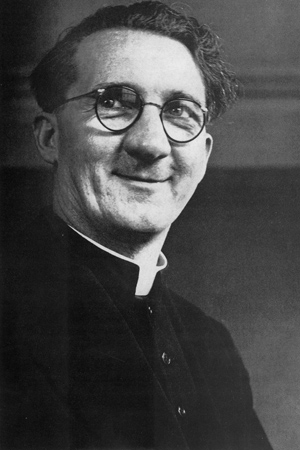
Monsignor Hugh O'Flaherty, "Vatican Pimpernel" - 50th Anniversary

October 30th last was the 50th anniversary of the death of Monsignor Hugh O'Flaherty, who was known as the Vatican Pimpernel during World War II. Hugh is my third cousin (once removed). My Great-Great Grandfather was Daniel Murphy, his brother James, is Grandfather to Hugh. I was four years old when he died, though never did meet him. My Dad often mentioned that we were related to him and a few years ago I was able to figure out the connection through the Murphy family in North Cork.

Image source: www.hughoflaherty.com
Monsignor O'Flaherty helped Jews and Allied soldiers escape captivity and almost certain death in Rome which was occupied by the Germans. He used the diplomatic immunity of the Vatican to run his operation and was decorated after the war with a CBE (Commander of the British Empire), and the US Medal of Freedom. The following extract from www.hughoflaherty.com gives a short summary of what he did:

In the autumn of 1942, the Germans and Italians began to crack down on prominent Italian Jews and aristocratic anti-fascists. Having socialised with these people before the war, the Monsignor now hid them in monasteries and convents, in his old college and in his own residence. In the spring of 1943, his operation broadened to include escaped British prisoners-of-war and shot-down allied airmen. He developed a network of safe apartments in Rome in which they could hide.

By the end of the war he had helped over 6,500 Jews, American and British Soldiers escape from the Germans and his activities earned him the nickname “Scarlet Pimpernel of the Vatican” as he became the master of disguises, evading capture from the Germans when he had to leave the security of the Vatican to go on his rescue missions.

In 1983, his story was made into a film called "The Scarlet and the Black", starring Gregory Peck as O'Flaherty, John Gielgud as Pope Pius XII (after whom I am named), and Christopher Plummer as Col. Herbert Kappler. Here's an extract of the movie from YouTube:


Rest in Peace Cousin.

Saturday, November 09, 2013

Three Pints for Dad, Joe, and Me #moments


Today I had the pleasure of a pint of stout with my Dad (Joe) and my brother (Joe) in O'Neill's Bar in Tramore, Co Waterford. Many friends and family have been asking about Dad, and as you can see he is in great form, and getting ready to enjoy a pint of plain. Three pints and three O'Loughlins - went down well!

Thursday, November 07, 2013

A Million Irish People are members of Linkedin! #gosh

The Silicon Republic is reporting that LinkedIn reaches 1m Irish members, reveals details on employment at home and abroad. This includes about 100,000 Irish users living abroad. This is an astounding number and in the article, Sharon McCooey of Linkedin is quoted as saying “One million Irish members is an important milestone for us, illustrating that Irish professionals really understand the potential of LinkedIn to network, showcase their experience and seek out job opportunities”.

Image source: Silicon Republic.
The population of Ireland is 4,588,252 according to the 2011 census. 535,3893 of the population are over 65, and 1,205,527 are aged 18 or younger (Data source: Central Statistics Office). It's my guess that not many in these two age groups are members of Linkedin, so if we discount them we are left with about 3 million people - so, one third of these are members of Linkedin. Phenomenal!

Though I keep my own Linkedin profile up-to-date, I am not a big user. I do like to see who has looked up my profile, but most of the news flow is about who has connected with each other. I know there is a lot more useful information in there, but I just don't seem to be bothered to check it out. How useful is it for me to know that I am linked to "6,894,555+ professionals" according to my profile? It would take 80 days just to count to that number non-stop! One of the things that annoys me about Linkedin is "Endorsements". I have been "endorsed" for Lecturing by people I know have never been to a lecture of mine. I have been "endorsed" for Moodle by folks who have no idea what I do with Moodle and have never seen one of my Moodle course pages. I have been "endorsed" for stuff by people that I have never met and only know via Linkedin. While is is great to be endorsed for anything, I'm not sure how valuable many endorsements are. When I endorse others it is always on the basis that I am familiar with the work that person has done that I am aware of.

Tuesday, November 05, 2013

Real help, from real people, in real time

Here's something very interesting from Google - Helpouts. This is where people can get and offer help on-line to get a helping hand with whatever it is that they need help with. So far you can get a Helpout for setting up printers, cooking, health and fitness, DIY, and many more areas. The idea is a simple one, say you need help with learning to play guitar - there's free helpout where you can access an expert live on-line who will help you out. The number of categories is quite small, and the variety of Helpouts is still low - but this is certain to grow. Some Helpouts link to YouTube channels - here's a Google video with more information:


To me this sounds like a great idea, even though it is still in its infancy. The costs are from free, to $1 a minute, to $25 per Helpout. It's an interesting model that I'm sure Google has run the numbers on - their revenue sharing model (38% for Google, 62% for content provider with AdSense) is sure to attract people who can offer their expertise on-line. Think of that time you rang your Dad to help you out when unblocking a sink or fixing a plug. As long as you have a computer - help is never far away.

Friday, November 01, 2013

How To... Draw a Simple Histogram in Excel 2010

An essential ability for anyone analysing data to have is to be able to draw a Histogram. Not to be confused with a Bar Chart, a histogram is a chart (usually a simple column chart) that takes a collection of measurements and plots the number of measurements (called the frequency) that fall within each of several intervals (called bins). It is the frequency and bins that you need to draw the histogram.

In my latest video I show how to draw a histogram with Excel's Data Analysis Add-In. The example data I used are the grades of students who took an exam. Here is the video from YouTube:

Thursday, October 31, 2013

The Web at its best with @SocialWebMining #analytics #HDSDA

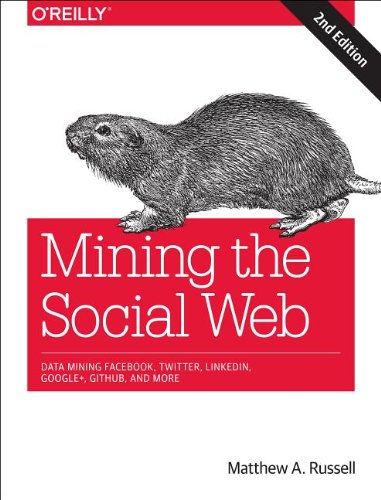
On Tuesday last I received delivery of the 2nd Edition of Matthew Russell's book Mining the Social Web. This is an exciting book that (hopefully) will get me, and many others, up to speed mining the rich sources of data in Twitter, Facebook, Linkedin, and Google+. It does not cover YouTube as I would wish, but no doubt that will come in a future edition, and anyway I'll have to learn to walk before I can run.

Image source: Amazon.
However, in order to follow the examples and code that the book uses, Russell advises that a setup involving VirtualBox and Vagrant, plus using GitHub be used. There are step-by-step instructions at GitHub to get this working. So I set about getting this to work at the office and immediately ran into firewall issues. I had to switch from the wired College network to the wireless Eduroam network just to download the necessary packages. I tried it at home yesterday, and again at work today. I got a little step further each time, but eventually this evening I finally got everything to work on my home PC - two days after starting.

But that is not the coolest thing about this experience! I tweeted about the frustration I encountered, mentioning Matthew Russell's Twitter handle (@SocialWebMining) in my tweet. Well - Matthew picked up this tweet and offered to help via GitHub. We spent a couple of hours exchanging issues and he was a great help in getting me further along the way to getting the setup to work. How cool is it that the author of a book helps out somebody thousands of miles away? This is the web at its collaborative best, doing something that would have been almost impossible just a few years ago. Thank you Matthew for your help.

Now I will learn how to mine Twitter first and will no doubt report here some of my findings. 

Wednesday, October 30, 2013

A Custom URL for Google+ Profiles #NowWhat? #TooManyThings

Today I received an email from Google offering me a custom URL for my Google+ profile. This is so that it "lets you easily point people to your profile (no more long URLs!)".

Image source: Wardell Design Blog.
The wonderful URL "reserved" for me is google.com/+EugeneOLoughlin. I tried to change it to have +eoloughlin at the end, but even though this is my Google user name I was told it had already been taken! 

Google+ hasn't really taken off for me yet, and Google seem to be determined to keep this up even after their "Buzz" debacle. I wish them well, but I'm not sure how a custom URL makes a difference (it's easy to shorten URLs these days with the likes of bit.ly). It's also so easy to find people's Google+ profile - a search would be quicker than trying to remember a URL.

I also note that for people with an apostrophe in their name (and I'm sure with other nationalities' symbols too) that it is not possible to have a URL with their full name.

Thanks Google, I have added this to my web page, it's now the 5th link after Twitter, Linkedin, Facebook, and YouTube. I have too many things!

Monday, October 28, 2013

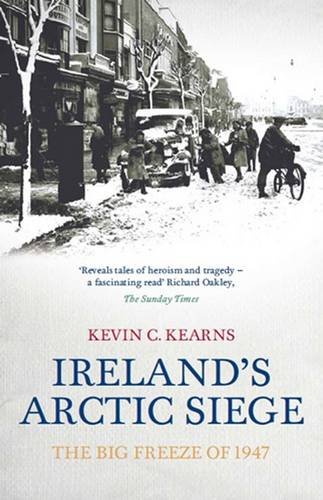
Book Review - Ireland's Arctic Siege: The Big Freeze of 1947

During the summer I read Kevin Kearns' excellent account of one of the worst winters on record ever endured in Ireland. It was called "The Big Freeze" which lasted two months, and brought the country to a standstill. I had meant to write a short review when I finished reading the book, but it has been sitting on my desk now for months and it is finally time to review and put it away.

Image Source: Amazon.
Kearns writes about the hardships suffered by everyone, most notably the poor living in tenements in Dublin. Bad freezing weather meant that ordinary things like fuel and food were running out fast, and as always, it was the poorest that suffered most. Since Ireland did not possess any equipment to clear roads and railway lines, there was hardly any traffic for two months meaning that aid could not be delivered to those that needed it. One thing that comes in for particular criticism was the de Valera government's inaction throughout what was a national crisis. Kearns tells of tales of bravery and of tragedy in the east and west of the country. The lack of leadership stands out, and it was the ordinary citizen that won out in the end.

My Dad was in school in Roscrea in the mid-lands at the time and remembers very little bad weather. Areas like Cork were not affected too much in what was a long spell of cold right across Western Europe. I remember the harsh winters of 1981/1982 and 2010/2011, but they were nothing like the misery our parents and grandparents endured in 1947.

I really enjoyed the book, but did think it was a bit long - I wondered which would come first, the end of the snow or the end of the book. 

Friday, October 25, 2013

Gather your own Big Data with #Lightbeam from Mozilla Firefox #awesome

Today I noticed quite a bit of news and traffic on Twitter about a new tool that allows you to track the first and third party sites you interact with when browsing the Web. It is called Lightbeam and can be added to Firefox from here. In just a few moments I visited Amazon, YouTube, and this website. It is surprising how many sites interacted with this. When I visited www.eugeneoloughlin.com - 28 sites were connected even though I typed in just one URL. The graphics are also very cool - here's the one for the above 28:


It updates every time you visit a new site, and you can capture and save the data (in a JSON file). This is an awesome use of analytics and will really inform users just how much tracking is going on. I wonder if the CIA and MI5 have already figured out a way not to be tracked by this?

Wednesday, October 23, 2013

How does Google/YouTube know your age? #analytics #HDSDA

From time-to-time I share some analytics from my YouTube channel with my students (begging their forgiveness in advance for my self-indulgence). Many are fascinated (as I am) about things like number of views, demographics, and earnings. In the Demographics section I usually display the age profile of viewers over the lifetime of the channel, and comment that the biggest group are males in the 45-54 category (to which I belong myself). See these data below:


One of the most common questions I get is how does Google/YouTube know the age of someone who is viewing the video? If you are not logged on, or say you are using a public computer - how do they know? In the chart above there is no "Age unknown" category. One YouTube insider has told me that they "take a look at the viewers that are logged in and estimate what the total distribution is from there, taking into account some demographics are more likely to log in than others". Another told me that if "3 out of 10 people have the information available, the information will be extrapolated to the 7 with less fine manner". 

One thing you can do is check out the analytics for subscribers only, as this is likely to be more accurate assuming people don't lie about their age when they create a YouTube account. When I do this a completely different picture emerges:


I would have expected both charts to be similar. However, in the second chart above you can see that the age profile is a lot younger than I had previously thought, with the 25-34 age category dominant, while the 45-54 category accounts for a much smaller number. I am mindful that younger people are possibly more likely to subscribe. While Google are getting better at profiling people, clearly there is some way to go to really have accuracy in this field.

Tuesday, October 22, 2013

My Mum and Dad - 55 Years Married Today!

On 22nd October 1958 Phil Byrne from Gorey and Joe O'Loughlin from Carnew, were wed in Ballybrack Church in South Dublin by Joe's uncle Monsignor Charles Hurley. Today is their 55th (Emerald) wedding anniversary - an increasingly rare achievement you'll agree. Below are scans of some photos (click to enlarge) from the day - sadly most in the group photo are no longer with us. Congratulations to my Mum and Dad - roll on the 60th anniversary!


Saturday, October 19, 2013

"Political Gridlock" in America - Black and White Tellies to Blame! (via @usnews)

Brad Bannon writing in the USnews.com web site has an interesting opinion on why there are political problems on Capitol Hill in the US between President Obama, the Senate, and the House of Representatives: "Hate Political Gridlock? Blame It on the Boomers". Baby Boomers are people born between 1946 and 1964 (that makes me a baby boomer!), and Bannon points out that they "currently dominate American politics" - by (my) extension they do in the rest of the world as well. He says that the baby boomers are to blame for the polarization that exists in American life and politics. 

Black and white photo of me
as a baby (boomer) in 1960.
There is a very simple reason for this according Bannon: "The boomers grew up in the world of black and white television and a black and white culture with no shades of grey. They lived in a world where there was a right way and a wrong way to do things. For boomers, it's their way or the highway. The boomers grew up during the the Vietnam War and the assassination of two Kennedys and one King. Conflict, not compromise, goes with the territory". I never thought of it that way! My Mum always said that watching too much telly was bad for me. So I guess that all those kids my age watching TV in the 1960s and 1970s were sowing the seeds of political stubbornness that would grow 40 years later. The Monkees, Wanderly Wagon, and The  Waltons have a lot to answer for!

Maybe we are to blame for everything? But don't worry - the "millennials" (those born between 1982 and 2003) are here to save the world because they "grew up in a world of color TV"! 

Jaysus.

Wednesday, October 16, 2013

Using Audioboo to keep audio memories

Since I first started blogging I have used various tools to add audio files to my blog, but the tools to embed/display audio files never seem to last very long. I have used Audioboo for a while now to store audio files which can be embedded into a blog post. Below are some samples which I have previously published, but the links in these old posts were broken/no longer valid. These are precious files to me and I'd like to be able to ensure that they are kept on-line forever.

Wedding message for my Mum and Dad from Paddy and Kathleen Byrne (Mum's parents) which was recorded on a 78rpm vinyl record and sent to my parents in 1958:


Wedding request on the Val Joyce Show on RTÉ Radio 1 on the 13th September, 1986 for my own wedding to Roma Bourke:


My Dad Joe singing "If I can Help Somebody":


My Dad singing "Fr O'Flynn":


My Dad singing "The Mountains of Mourne" on RTÉ's "The Derek Mooney Show":


Monday, October 14, 2013

Banning Laptops from Lectures (via @TIMEIdeas) - Not for me!

Professor James Loeffler writing for Time Ideas in an article entitled Professor: I Banned Laptops from the Lecture Hall, states that when he "finally got tired of playing Internet policeman" that he decided to "ban laptops" in a history class. He cites the reasons as that in addition to laptops providing "an outlet for boredom", that they have a "negative effect on the more attentive students, many of whom compulsively transcribe every utterance" onto their laptops. Loeffler concludes that the "essential skill of discernment, of determining what is important and what is not, gets lost in a world of students turned secretaries, dutifully taking dictation". He claims that many of his students "are relieved" as a result, and that laptops "undermine the radically simple mission of higher education: learning".

Image source: 1 act a day Blog.
While I see merit in what Prof Loeffler has done, I'm not sure I agree totally with him. He does point out that there have been distractions in classes since the days of Aristotle (I can remember doodling in class with a pencil - should this be banned?), and he is right to be concerned with anything that might interfere with "learning". I do feel that students using computers (or tablets/smartphones) in class can be a distraction and my suspicion is that many are not involved in note taking or looking up a word or term they don't understand. Only last week I posted about how Laptop multitasking hinders classroom learning for both users and nearby peers. My belief is that Professors/Lecturers/Teachers should have a strategy for dealing with technology use in the classroom. For example, the iPad and many similar tablet devices have note-taking properties with a stylus - surely this is just the same as using a pen and paper? Maybe even better?

I would love to see the day when every student has a laptop or tablet in class that can be used for in-class engagement as well as for note-taking and referencing. What can be frustrating for students is that they might be allowed in some classes, but not in others. Universities and Colleges need to seriously think about their strategies for dealing with this in an era when the humble wristwatch is being turned into a smart device, and students are becoming completely immersed in digital environments.

Saturday, October 12, 2013

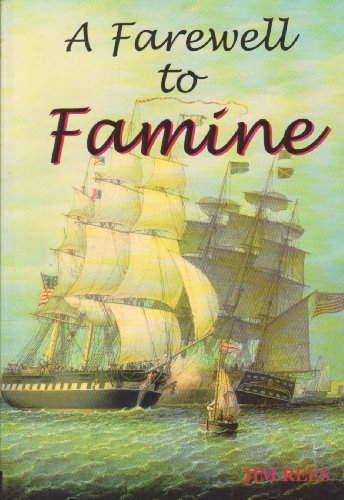
Book Review: "Farewell to Famine" by Jim Rees

A couple of week ago I heard an interview on the RTÉ Radio 1 "The History Show" with Wicklow historian Jim Rees, who talked about The Fitzwilliam Clearances in South Co Wicklow and North Co Wexford (where I grew up). The interview can be listened to here. In the interview he refers to his book "Surplus People: The Fitzwilliam Clearances 1847-1856" which is unfortunately out of print. In the mean time my Dad lent me his copy of another one of  Rees's books "A Farewell to Famine".

Image source: Amazon.
This book tells the incredible story of Fr Thomas Hore from South Wexford who brought hundreds of survivors of the Great Famine from Wicklow and Wexford to America - mostly to Arkansas and Iowa. Along the way he kept his group together until they reached New Orleans, where the groups started to fragment. Rees describes the sense opportunity and the salvation of theses people - as he put it, they were not so much as going to America, but were leaving Ireland.

What it must have been like to leave everything behind is hard to contemplate. As Rees describes it - it was like a death in the family when someone left Ireland as they were very unlikely to be seen again. The real hero of the story is Fr Hore, who despite many setbacks, managed to get a least some of his flock to the land he bought for them (at $1.25/acre) in both Arkansas and Iowa. For all of them there was possible death and certain hardship if they remained in Ireland - in effect he was a priest who saved hundreds of people from poverty and death at a time in Ireland when the population was uprooting in hundreds of thousands for a new life in America. A list of those families who travelled shows surnames that will be very familiar to locals.

I highly recommend this short book, it will be of particular interest to people from the South Wicklow and North Wexford areas. 

Thursday, October 10, 2013

The Mannerly Student: College Classroom Etiquette via @DianeGottsman

Here's some good advice for students from etiquette expert Diane Gottsman - she gives 12 tips for good behaviour and manners in College. I posted about the first of these relating to laptops in class yesterday, but several of the others are just simple common sense and good manners. Read all 12 for yourself here.

Image source: ifIknew.org.
While I think that everyone, not just students, should adhere to classroom etiquette, my favourites from Gottsman's list are:

  #6:  No such thing as “fashionably late”
  #8: Choose your seat wisely
#10: Avoid monopolizing your professor’s time

One not on the list is about students getting up in the middle of the class and walking out (presumably to go to the loo) without excusing themselves or apologizing for the disruption (however brief) they cause.

It's easy to have manners, but it is not easy to be mannerly all the time. It's also easy to be rude, and unfortunately it is easy to be rude all the time. College is a place of learning, but by the time students get to College they should not still have some manners to learn.

Note:
I know some of my own students read this blog, and in the main they are (and always have been) a mannerly bunch. This post is about manners in general, and is not based on experiences in my own classes. 

Wednesday, October 09, 2013

Surprise surprise! Laptop multitasking hinders classroom learning for both users and nearby peers

What should we do about laptop use in class (or desktop use in a lab)? This is a common question that challenges both lecturers/teachers, and students. From my side of the classroom all I can see are the backs of laptops or computer screens. I of course don't see what the students are looking at. Many are following my notes/examples on their own screens. However, I also know that some are on Facebook or checking email. But it could also be that they are checking up a definition of a term I use, or looking for a translation of a word, or trying to find background information. I no longer insist that students switch off their laptops or mobile phones - they could be using them for learning. My only problem is with the misuse of technology in my classes.

Image source: DianeGottsman.com.
However, a recent publication by Sana et al (2013) provides some evidence that multi-tasking, by attending a lecture and using a laptop at the same time, is detrimental to learning. The study showed that students who use a laptop during class, or are near another student who is using a laptop, scored lower in tests compared to those who were not multi-tasking. So what do we do?

I agree with the authors of the study that a "ban on laptops is extreme and unwarranted" and that it "cannot be overlooked that laptops foster positive learning outcomes when used appropriately". The laptop is now an important tool for learning in the classroom. I met a student in another College recently who told me that one lecturer there does not allow students to use a tablet computer in class to follow notes downloaded from a VLE. The class were forced to PRINT OUT the lecture notes and bring them to class! No distractions from laptops in that class! Sana et al (2013) provide some suggestions for dealing with laptops in class:
  • discuss the consequences of laptop use with their students at the outset of a course
  • explicitly discourage laptop use in courses where technology is not necessary for learning
  • provide educators with resources to help them create enriching, informative, and interactive classes that can compete with the allure of non-course websites, so that students are deterred from misusing their laptop in the first place

Ultimately it is our own responsibility to manage our learning and teaching. If you bring a laptop to class and spend the entire lecture on Facebook, then you are being irresponsible because not only are you learning very little, you are also distracting others and consequently impacting on their learning as well. For us teachers, if we allow technology to be used in class - then we should lay down the ground rules in advance or perhaps find ways to incorporate the technology into student learning.


Reference:
Sana, F. Weston, T. & Cepeda, N.J. (2013) Laptop multitasking hinders classroom learning for both users and nearby peers. Computers & Education 62 24–31. Accessed 9th October, 2013 at: http://www.sciencedirect.com/science/article/pii/S0360131512002254.

Monday, October 07, 2013

1982 - it's really only a few minutes ago?

Photo taken in October 1982.
Last evening at the dinner table we had a chat about around this time 35 years ago when I started College in Trinity. I have very few physical reminders, like photographs, from that time, the nearest I can find is my ID card from 1982. I'm sure I'm not alone in looking back over time and wishing I was young again. Today in 1982 I was exactly 23 years old, and looked a lot younger than I do today. Sometimes I look at the skinny hairy young fella that I was and almost not recognise him. If someone told him 30 years ago what he would be doing now I'm certain he would have laughed at the stupidity of all suggestions.

What would I advise my 31 years younger version of myself?

Answer: "Don't change a thing, no regrets"!

Sunday, October 06, 2013

The People Have Spoken #seanref - and we said "Feck Off!"

So - maybe we like our Senate after all? 

Or maybe we don't like being told what to to?

Or maybe we like the politicians in the Senate and don't like those in the Dáil?

Or maybe we wanted to give the Government a kick in the teeth? 

Or maybe we actually wanted reform and not abolition?

Or maybe we don't want to lose Senator David Norris?

Or maybe Enda Kenny got this wrong and totally underestimated our intelligence?

Whatever,we said "Feck Off!" anyway.

Image source: Gadgetsteria.

Thursday, October 03, 2013

Why I'm voting "no" in the #Seanad Referendum

OK - first, I know no one cares whether I vote "Yes" or "No" in tomorrow's referendum to abolish the Senate. But here goes my rant anyway! In referenda, I normally go with what the government says is the right thing to do, but not this time. I am voting "No", as is my democratic right.

Seanad Éireann.
Image source: Wikipedia.
Since I graduated from Trinity College in 1983, I have had a vote in the Seanad elections to elect the three Trinity senators. This is a privilege that I take seriously, and have voted in every election since. I have had the pleasure of voting No 1 for Senator David Norris in every election since he was first elected in 1987. He, and many others such as Mary Robinson, Shane Ross, Joe O'Toole, Fergal Quinn, Noël Browne, Catherine McGuinness, Éamon de Buitléar, Garret FitzGerald, Douglas Hyde, Seamus Mallon, Conor Cruise O'Brien, T. K. Whitaker, Gordon Wilson, and many others, have made enormous contributions to Irish society through their roles as Senators. I say we are less without them.

The abolition of the Senate will save €20 million, but no one can seem to agree on the exact amount. If it was just about money, why not reduce the already enormous salaries the politicians pay themselves by €10,000 each to a slightly less enormous salary. Or stop the enormous pensions they get. Or just stop waste. I'm not convinced.

The abolition of the Senate will reduce the number of politicians. Turkeys voting for Christmas, I never thought I'd hear politicians campaign for a reduction in their own number! I'm not convinced.

The abolition of the Senate will make creating laws more efficient. Yeah right - our so-called democratic government already steamrollers through legislation without adequate discussion in the Dáil, never mind the Senate. I'm not convinced.

The abolition of the Senate will remove a powerless group of people from the Oireachtas. Well why stop there? Our President has no power, so why not get rid of him - that'll save a few bob. There are 166 TDs in the Dáil, most of whom are just lobby fodder, why not get rid of a few of them - more bobs saved. Actually, real power lies in the hands of very few people, so why not get rid of all those pesky politicians who get in the way - lots of bobs saved. Can Duce Kenny be far away? Is he that desperate to say that he won a referendum? I'm not convinced.

So I'm not convinced that getting rid of the Senate is a good thing, I'd be in favour of reform rather than abolition. 

Finally, despite many pleas from the media and politicians not to use my vote as a protest vote, I sure as hell protest at what the Government is doing to our country by lining their own pockets, wasting precious resources, and failing to tackle the bankers. 

So "No" it is.

Tuesday, October 01, 2013

A new iPhone @VodafoneIreland

At the weekend I treated myself to a an iPhone 5, upgrading from a 4s. For some time I have been unhappy with my contract with O2 which averaged €60-€65/month. I have opted for a new €35/month plan with Vodafone. With this I will have to manage better to use WiFi whenever possible rather than the Edge/3G network.

The iPhone 5.
Image source: Apple.
So far, the change from the 4s to the 5 did not go smoothly - it took two hours to backup and restore. In the end I managed to get my new phone to "look" like my old phone. But not until after a lot of re-installing and re-work. Most of the problems were caused by the fact that two iPhones have synced to my computer. Just when you think things will go smoothly, something will get in the way.

The new iPhone is fine - no doubt I will have fun setting it up over the next few days. It is my 4th iPhone, though I did consider moving to Samsung. However, the contract is for two years, so I'll be a Vodafone customer for some time. Back in September 2008 I rather excitedly wrote about getting my first iPhone. To do so I had to switch from Vodafone to O2, now I'm switching back again  - the only reason is the €35/month deal. O2, you have priced yourselves out of the market that I am in and you have lost a customer while you all figure out what the takeover by Three means for you. #eyeofftheball