Monday, May 09, 2016

Write About Writing #My500Words #237

This is day 10 of the My 500 Words Challenge - today I have to write about writing. To get me going, Jeffs Goins asks the following three questions:
  • What do you love about the craft? 
  • What do you hate? 
  • What're you struggling with, when it comes to this challenge? 
Epictetus.
Image source: Wikipedia.
The Greek philosopher Epictetus (55 - 135) is reputed to have once said "If you wish to be a writer, write". While I am not a novelist or storyteller I have to say that I do love writing. This post is the 1,617th post since I started this blog on 13th November, 2006. I don't know what the average length of each post is, but I'm guessing over 300 words - that would make almost half a million words written in ten years. That's longer than Gone with the Wind (418,053 words) though shorter than War and Peace (587,287 words). I never thought that I would do this or keep it up for nearly ten years. It is strangely liberating to be able to write whatever I want. This is my own blog and I am not ruled or judged by anyone. I don't care if nobody reads my posts - I just love the freedom to be able to do this.

Oh I do hate it when I get a negative comment. There haven't been many, but when they happen I get embarrassed. It's great to get comments, but I'm always fearful that what I write might attract a negative comment. I also hate the spam that a blog attracts. In my blog settings I have to approve all comments before they are published. Even though it only takes a few seconds to mark them as spam, I hate it that spammers think I'm stupid and will publish their rubbish. I also hate it when I get stuck thinking of something to write or when I leave it more than 2 or 3 days between posts. I hate making typos and grammar errors, especially when I don't discover them at the time of writing. It goes without saying that I also hate the amount of time I have to spend making corrections.

This challenge is a struggle. The hardest so far was to "Tell Someone Else's Story" - it took me a long time to base it on Michael O'Leary or even to think of an idea in the first place. There are a few more tough ones ahead. I have also often struggled with hitting the 500 word mark - some days (like today) it is a lot. I have also struggled with not doing a set time every day. At the beginning I thought I would get up early and write first thing, but it is exactly 22:45 now as I write this. I also wrote a bit of this post during lunch today. This is a discipline that true writers get used to - I guess this is not for me.

Sunday, May 08, 2016

Make a List #My500Words #238

Today's Jeff Goins 500 word challenge is to "Just write a list". Writing a list that is 500 words long seems weird because we think of lists as a few short words per item on the list. For my list I have decided to write a bucket list of things to do before I die. Here goes!

Image source: Smile and Shine.

Outlive my Dad!
Dad turned 85 this year - he is 28 years older than me. I want to live at least as long as him and make it to my 90s. I want to be a bad-ass 90 year old biker still riding my Harley-Davidson. I will be 90 in 2049!

Travel
There are so many places in the world that I would like to see for the first time and others that I'd very much like to go back to. I have only ever lived in Ireland and I think the longest time I have ever spent outside this country at any one time was two weeks of holiday. Here's just some places on my list to go to:

  • Anywhere in Australia
  • New Zealand for scenery
  • Hawaii - just to see those waves
  • Alaska for wilderness
  • The city of Eugene in Oregon
  • The Grand Canyon - again
  • Paris - my fav city
  • Berlin - on my bike
  • Iceland - I think I'd like the climate there
  • Canada - for the vast open country (and to see relatives)
  • Scandinavia - anywhere
  • Scotland - I've only been ever once

Write more books
I mentioned this in a recent post - but I would like to add to my three books. A fourth will come out next year, but after that I'll be looking for opportunities to try another few.

Get better at R
One of the most enjoyable things I did this past academic year was to learn how to use R in Data Analysis. I want to get better at this and use it for deeper data analysis.

Spoil my Grand kids
I used to joke with my daughters that when they have kids I will give them coke, chocolate, and Smarties all the time. While I probably will do this anyway, I'd like to be able to bring them to football matches and show them nice places to go. I think I will still be a teacher to them.

Ride
Riding my motorbike is one of the most enjoyable things that I do. I certainly hope that I can keep going as long as I can. Maybe being a bad-ass biker at 90 is a bit too optimistic, but I'd like to think that I can enjoy long rides well into my 70s. There are several countries in Europe that I have not been to - so I want to add riding my bike in Belgium, the Netherlands, Denmark, Germany, Switzerland, Sweden, Finland, and Norway, to my bucket list.

Go to Mass in St Peter's Square
I loved Rome on my one and only visit - there's so much to see and do. Last time I was there it was just before the election of Pope Francis so there was no papal mass. I'd like to do this.

Retire early
My official retirement age is 67, that's in just over nine years time for me. I'd love to retire at 62 - Roma will be 60 at the same time. I love my work, but I don't see myself as a 66 or 67 year-old teaching to young students.

The above are just a few of the things I'd like to do. There are also things I'd like to do but I'm certain that I would not have the courage to do:
  • Take a bungy jump
  • Get a tattoo
  • Try Sky-diving
  • Walk the Camino (I don't think my feet would be able for this)
  • Ride a fast motorbike around a racing track
  • SCUBA dive again
  • Go inside a volcano

Saturday, May 07, 2016

Letter to 5-year old Eugene #My500Words #239

Today's Jeff Goins 500 words challenge is to write something "that you wish someone would have told you 10 or 5 or even one year ago" and to "share your best advice with the world". I'm going to go a bit further back than that - I'm writing a letter to my 5-year old self when I was starting school. Here goes!

Dear Me (5),

This is your 56-year old self writing to you from the future in 2016. I look a bit different than you do now - a lot older, less hair, and I have a bit of a beard. I like your school photo and Mum's knitted jumper on you - you look very innocent and it will take a long time for you to grow up. In some ways I haven't fully grown up, and as I get older there are plenty of times I wish I was transported back to the early/mid 60s to be you/me again.

I wonder who your teacher was at the time of this school photo? I know it was taken in St Brigid's National School in Carnew and I'm guessing that it was taken in 1964 when you were 5. Mrs Keating might have been your teacher. You won't know this now, but she will have a huge influence on your education. She will slap you with her ruler because you won't know your tables, but she will be the last teacher ever to punish you like this - and you will thank her for this. You will quickly learn that to avoid getting slapped all you have to do is learn your lessons. After her class you will never be slapped again. Corporal punishment will be abolished in Ireland in 1982.

You are about to embark on a lifetime in education. You will spend the next 7 years in Carnew National School - when you are 56 you will barely remember any of your classmates by name and you will not have seen any of them for many years. Like me - they mostly all left Carnew. In 1971 you will be sent for a year to Scoil na nÓg in Trabolgan in Co Cork. This is to get you to learn Irish. It will work for a short while, but when you are 56 you will not be able to have even a simple conversation in Irish. You won't miss it, so don't worry about not being good at the cúpla focal. Despite what your teachers say you will manage in life without it. 

You probably don't know what a boarding school is yet, but you will spend 5 years in Cistercian College Roscrea away from the farm in Ballingate - this won't be easy. This will be followed by 8 years in Trinity - you will graduate with a PhD in 1988. This is a lot of learning which may seem like a mountain to climb for you now - but stick with it. I know girls are annoying to you now, but the best thing that will happen to you in Trinity is that you will fall in love (yuk!) with one. Later you will have children - more girls. After College you will spend your time teaching others - first in an e-Learning company and then in a College where I am now. You won't regret your path through College and the work place - I will not advise you to do something different. 

Enjoy every moment along the way. You will makes mistakes, but this is a great way to learn - you will get good at not making the same mistake twice. You will not be an astronaut, a  movie star, or a great footballer. You won't be rich or have a big car. Something exciting is awaiting you in thirty years time - you will own a big Harley-Davidson motorbike that will make you feel like a 5-year old again every time you get on it. You will not live near Carnew - in fact, from 1971 onwards you will spend very little time at home in Ballingate. Dublin is getting ready for you. You will never lose your ties with Ballingate - never forget where you are from. 

You will be a good boy - sometimes boringly so. If I were to give you some advice it would be to take a few more chances. Rob that orchard, skip class occasionally, nick one of your Mum's delicious scones when she's not looking, ask that girl out when you are a teenager, don't be such a slow driver all the time. 

Me (56)

Friday, May 06, 2016

Tell Someone Else's Story - "Why I want to shoot Eugene" by Michael O'Leary, #My500Words #240

It's Micko here and I want to tell you all about my plan to eradicate the nuisance of cyclists on our roads. Day after day I have to put up with cyclists in my Bus Lane who won't get out of my way. Who do they think they are? Why should I have to put up with lycra-clad cyclists wriggling their arses at me while I am on my way to the most important job in Ireland? 

Cyclists in Dublin. Image source: The Irish Times.
Dublin City Council wants to increase the number of bikes on the capital's roads - well I say "bollocks" to that. What we really need is 24-hour a day/7-day a week dedicated traffic lanes for airline CEOs (not including Aer Lingus). These strategic lanes will be armed with face-recognition software and automated machine guns to deal with the menace of cyclists. I don't buy all that "saving the planet" tosh that they go on about. They shite on about "sharing the road" which of course is for other people, not for me. What I say is "Cyclists should be taken out and shot".

In order to make an example I have (completely at random) selected the first cyclist to be shot - that O'Loughlin fella from South Dublin. There he is (smug as shite), cycling along the Rock and Strand Roads every morning and every evening past all the cars stuck in traffic. Who does he think he is in his short trousers, sunglasses, and loud gaudy helmet and yellow jacket. High-viz me arse - who would want to see him?

O'Loughlin boasts about taking only half the time to get from his gaff to work compared to a car. Well - we'll see about that tomorrow morning. My firing squad will be waiting for him at the East Link Toll Bridge (it's very annoying that cyclists don't have to pay to cross this bridge while us gentle motorists have to cough up €1.65 every time). His bike will be tossed into the Liffey as a warning to all cyclists not to cross the river. He will be tied to the railings on the bridge, offered a Ryanair Lottery Ticket and some Duty Free, and shot immediately. The low-price firing squad will consist of six Ryanair employees skilled at detecting oversize carry-on luggage at check-in desks. To keep execution costs down, the squad will take the bus to and from Dublin Airport, and will have just one bullet each.

I pay more tax in 5 minutes than O'Loughlin does in a year. The country will be far better off without him. He will just be the first to be shot - flying (I'm so punny!) squads will shoot at least 99 cyclists every day. If there is a All-Ireland Final on or a major event happening in Dublin this will go up to 250 cyclists/day. I hope to be able to announce to the stock exchange that our target of 250,000 dead cyclists will be exceeded by the end of the year. Next year we will shoot 500,000 cyclists and continue our growth going forward.

Thursday, May 05, 2016

Write what you know #My500Words #GAA @officialGAA @wicklowgaa #241

Today's 500 word task from Jeff Goins is to "Describe a day in your life you will never forget". I've had a bit of a think about this - my wedding day comes to mind, so does graduating with a PhD, the first time I had s*x, the day I got the keys to my Harley, and many more. But the day in my life that I will never forget that I want to write about today is actually a day that I remember very little about. Family members and regular readers of this blog will already know this story - so if you're bored with it look away now!

My Grandfather, Croke Park, Ice Cream, and Gay Byrne.

My grandfather PJ O’Loughlin died in 1965 when I was almost six years old, and I have very few personal memories of him. He taught me how to tie my shoelaces – I still tie my laces in the way he showed me. I also remember the tricolour draped coffin at his funeral, and the shots over his grave – the first time I ever heard gunfire. He was a staunch GAA man and served as Wicklow County Secretary in the late 1930s.

My Grandfather.
However, my favourite memory is of the occasion that he brought me to Croke Park for my first All-Ireland Final in the early 1960s as a small boy. I was only 4 or 5 years old – the year was either 1963 or 1964, I don’t know which. I do know it must have been well before the 19th of June 1965 when he died.

I recall practically nothing of the occasion which must have been a very exciting one for a small boy – no memories of the trip from Carnew in south County Wicklow to Croke Park, if I was lifted over the turnstiles as was then the fashion for small children, what the atmosphere at the match was like, or the trip home. I have no recollection either of what teams were playing that day, who won, or what the score was. Indeed, I don’t even recall if the game was football or hurling.

The only thing I remember about the occasion was that at the end of the game as the crowd filtered out, my Grandfather climbed over several rows of empty seats to an ice cream seller. He came back to me with a small tub of ice cream, which had no little wooden spoon to eat it with. When I announced that I could not eat the ice-cream for lack of a spoon, he quickly showed me how to use the lid as a scoop and I savoured the moment, and of course the ice cream. An unforgettable memory!

Years later (in 1998), I was listening to The Gay Byrne Show on RTÉ radio – Gay was hosting a discussion about the previous evening’s Paul McGrath Testimonial football match at Lansdowne Road. There was a lot of discussion and several complaints from callers about the cost of tickets and that many children had to have the full adult price paid for them. One irate caller told us that he had brought his young son to the match for the price of an expensive full adult ticket. When Gay asked him why on earth he had done this, the caller responded that he wanted his son to be able to say that he had seen Paul McGrath and many other football stars play, but most important of all was that he would be able to remember that he was there.

In words that turned back the clock and instantly transformed me back over the years to Croke Park and my Grandfather’s climb for ice cream on a day I'll never forget, Gay responded to the caller by saying: “If you want him to remember that he was there, buy him an ice cream after the match”.

The 1936 Junior All-Ireland Football Champions - Wicklow.
That's my Grandfather in dark suit on the left.
Image source: Leinster GAA.
Versions of this story have already been published on History Ireland and previously on this blog.

Wednesday, May 04, 2016

Learn to Free Write #My500Words #242

Here's today's challenge from Jeff Goins about "Free-writing":

Free-writing is writing without worrying about editing or punctuation or anything else that would keep you from, well, actually writing. The idea is to get the words down as quickly as possible and work on the polishing of the prose later.

If you can get into the habit of doing this, you will find that you CAN crank out 500 words, sometimes more, every single day without trouble. Otherwise, you'll get stuck endlessly editing the same 200 words over and over again, never hitting your mark.

Master the art of silencing the inner critic, letting go of perfectionism, and embracing your art.

So: from this point on in this post - I will not use the backspace or delete key to correct mistakes.

I nevere formally learned to use a keyboard - not even an online tutorial . I do recall my Mum trying to teach me to type proper on her Olivetti typewriter back in the 70s - I don;t think this was in preparation for the coming of the computer age, rateht I think she felt is would be a good skill to have. I really only started to use keyboards in the mid-1980s when I learned how to use the DEC-20 mainfram computer in Trinity as part oof my PhD studies. I use just a few fingers when typing and I spend most of the time looking at the keyboard rather than at the screen. As you can see so far I am  terrible typist and I rely a lot on spell-checkers and grammar -checkers to try and write proprely. I always (even after writing one sentence) look back to check spelling/grammar. And I make a lot of corrections. I am concious that I cannot use the backspace and delete keys while writing this so I'm guessing that this hightened sense of awaresness of my typing is making me a litlle more accurate than normal.

Ti's exam time in the COllege and soon I will be reading exam scripts from my styudents - almost all will be hand-written. Many students cross out sections or parts of wprds. They use tipex or erasers to correct as they co along. Others just scribble out a typo and staryt again. As I do not teach English grammar or spelling, I never take account of typos in an exam script - there is no reduction in marks for bad writing. I do find a hyuge contarst between students who can write very well and those that make a lot of mistakes.

I guesss the use of shortened words in text messaging has a lot to answer for ny1 wrtin 2day. I never got the hang of this and I am boringly weticulous whne using texts to ensure that I have teh correct spelling and grammer before sending. I am so slow at this I often find myself falling behind in text/WHatsApp conversations. Of course there is a more serious side to all this - dyslexia can be a problem for many peoplse in trying to use the written medium for communication.

Some teachers give their students a 5-10 minute spell of "free writing" to develop writing skills without the fear of correction. Thsis generates ideas and foccues on fluency rather than accuracy. If done frequently it builds confidence and improvs the routing of writing (see http://www.slideshare.net/gscruton/free-writing-8075889). Claire Schadle writing in Peerspective issue 6 (https://drive.google.com/file/d/0By4Gk8r5qOsQZmJmODk4ZmMtYWM4NS00YWJmLWEyYWUtZjBmYTgwNDk2Nzg0/view) uses free-writing with Japanese students learning English. Here results were mixed, with some students engaing very well while others found free-writing diffeicult to graslp. Her idea was that students were free to make mistakes and experiment - just as long as the wrote continuously for 10 minutes. She cooelcted thaeir writing at the end of every class and gave them gfeedback on what they wrote.

There is a stragne sense of freedom in writing like this. First - it is difficult to not use the backspace/delete keys when you know you have made a mistake. Many of the typos above I eanted to correct straight-away as I realised I had hit the worn g key. Bith most of the above erros I will not have noticed as I typed necessitating a proof read and correcting before I post or send text.

Tey it some time!

Note: 132 words at the beginning of this post not counted in today's 500 words.

Tuesday, May 03, 2016

Get Up Early #My500Words #243

My radio alarm clock is set for just before 07:00 on weekdays - just in time to tune into Morning Ireland on RTÉ Radio 1. I have a dreadful habit of staying in bed to listen first to The News, and then to It Says in the Papers before getting up.

Lack of time is often cited as an excuse/reason for writers not to write - we feel we just don't have the time to write. Other things get in the way, but we should spend time on the things we value most - so make time for writing is today's message. Many writers do their best work in the mornings - get up and write a couple of thousand words before breakfast. According to Forbes.com, the Top 10 Advantages of Waking Up Early are:

  1. Earn better grades
  2. More proactive
  3. Anticipate problems
  4. Better planners
  5. Time to exercise
  6. Get better sleep
  7. More optimistic
  8. Early commutes
  9. A quiet hour
  10. More family time


Image source: Via Romea.

I particularly like #6 and #7 - sleep experts say that if you go to bed early and get up early, your body is more in tune with the earth's circadian rhythms, which offers more restorative sleep. As for optimism - other experts say that that early risers exhibit character traits like optimism, being agreeable, satisfaction and conscientiousness. Later risers are more likely to exhibit traits like depression, pessimism and being neurotic. 

Just yesterday Dwayne "The Rock" Johnson, according to The Verge, released a motivational alarm clock app. The Rock gets up early every day - at 04:00. The Rock Clock, as he calls it, is all about "setting your goals and waking up early enough each day to tackle them". And to get it out of the way, the Rock Clock does not have a snooze button! Sounds like a great app, though as yet I can't use it on my Windows phone because it is only available on iOS and Android. It can even let you set goals like "lose weight" or "run 30 miles per week". The Rock says "It's my anchor and will always be my edge over my competition. You don't have to wake up at the ass crack of 4am dawn to find your anchor. Whatever it is that gives you "your edge" over everyone around you - then that's what you do", and that from this "historic day forward - I'm waking your ass up" - motivational stuff! I seem to recall someone like Tony O'Reilly saying a long time ago that Ireland would be much better off economically if everybody started work an hour earlier. I get up shortly after 7, but usually do not get to work until between 09:00 and 09:30. What am I doing for two hours? The answer is that I take my time over breakfast (tea and brown bread), read the papers on my iPad, check email (just personal - never work), check Facebook, and sometimes check Twitter. By the time I'm showered and dressed it's suddenly 08:30. I must make better use of this time in the morning.

When you wake up at 05:00, you start your day earlier than 99.9% of the world - hence giving you a head start in your day. And of course, you get to see the world wake up!

Monday, May 02, 2016

Goals #My500Words #244

Today I have to set my goals for the My 500 Words challenge - how am I going to do this? As Jeff Goins says: "Do you want to finish that novel? Start a blog? Just get into the habit of writing? What kind of change do you want to see happen in the next month?".

Well I have a blog which I started in November 2006 - check! I'm not planning to write a novel - apart for not having any talent for this, I have not got an idea for a story (at least good ones!), nor do I believe that everybody has a novel in them. No - I do not want to write or finish "that novel". I have already written three books:

Image Source: teamgantt.com.
Last summer I started work on a fourth book "Exploring Ireland's East and South East Coasts" - this was to complete a trilogy of books about my ride around the Irish coast in 2012. A lot of is it written - I started the journey in a clockwise direction around the coast from the mouth of the Liffey in Dublin. I have documented my journey from Dublin to Kinsale where the Wild Atlantic Way starts. I have yet to write about the last part of the round-Ireland journey from Newry to Dublin. Having complete the Wild Atlantic Way and Northern Ireland books which has tonnes of interesting places to write about, I found the East coast in particular difficult to write interesting stuff about. The Wicklow and east Wexford coast don't have the iconic landmarks like the Ring of Kerry, the Cliffs of Moher, the Slieve League cliffs, or the Giant's Causeway, that other parts of Ireland have. I realised that I need more material - especially photographs. I also confess to not being motivated to finish the book - I might even be suffering from writer's block. So - this summer I will go back to many places on the East and Southeast coasts, take more photos, meet more people, and see more places. 

Goal #1 for this year - finish Exploring Ireland;s East and Southeast Coasts.

Goal #2 is to adhere to the discipline of writing a fixed amount each day during the Jeff Goins My 500 Words challenge. I have never done anything like this before - I hate being told what to do. 

Goal #3 is to not write shite.

Goal #4 is definitely to get into the "habit of writing". Blogging is very much part of me now that I don't want to give it up or let it die. Even if nobody (except my Mum!) ever reads it - I still want to do it and keep the habit up.

Goal #5 is to think a bit about what to write after I have finished the East and Southeast Coast book. I once submitted a book about video and education to a publisher, but didn't take it any further when the idea was rejected. Over the past couple of years I have thought of making my Business Data Analysis module at the College into a textbook. The world does not need another text book on Statistics - but I have entertained the thoughts of converting my notes into a book but to also make it original by including video. An option here would be to go for an iBook type publication - it's just an idea at the moment.

Sunday, May 01, 2016

Commitment #My500Words #245

Day 1 of the Jeff Goins "My 500 Words" challenge and I'm looking forward to seeing what I can do to rise to this challenge. For days 2 to 31 Goins provides many suggestions for the daily 500 words - themes such as:
What 500 words looks like.
  • Make a list
  • Tell someone else's story
  • Write about food
  • Pick a fight
  • Write a confession
  • Give your own eulogy
  • Write about waiting
I will have lots of other things that I could write about over the next month. I have been doing more family history (going back to the 1700s), it's a busy time at the College, we will finally have a government in Ireland - but this will all have to wait as the 500 words challenge takes precedence for the next 30 days. 

Goins tell us on Day 1 to commit to writing and to announce it. All my blog posts automatically go out on Facebook, Twitter, and Linkedin - so here I am announcing this to the world (or at least to the few people who occasionally read my blog). I'd love to get some encouragement and feedback along the way, so please feel free to "Like" (or "unlike") what you see. 

500 words to some people is a lot - to others very little. To visualize what it looks like I inserted the word "Words" 500 times onto an A4 page with a Times New Roman font size of 12 - it is nearly a full page. At this point in this post I am about half-way there. Of course making 500 words meaningful and interesting is the hardest challenge. 100 quality words will be much better than 500 words of dirge any day of the week. If I complete this challenge I will have written 15,000 words - that's about one-third the size of my Exploring Ireland's Wild Atlantic Way book. 

Word count is an important part of student assessments - I try to give a guideline as much as possible. Students want to know what's expected - I get asked a lot "How much should I write?". I inform my students that my word count guidelines do not count things like appendices, data, tables, table of contents, words on graphics, bibliography, and quotations. Students rarely stick to the guideline and often exceed it by a considerable amount. I do not apply any penalty for this, but I do tell the students about the importance of scope and following instructions/guidelines. I use the analogy that if they instructed to build a two-story house, they would not build a four-story version instead. What makes it difficult for me when students exceed the guideline is that when the extra work is very good - it makes work by other students who stick closer to the word count guideline look weaker. I have to remember this when applying grades - there is no real benefit to students exceeding the guideline as far as grades are concerned, though obviously there will be a benefit from a learning point of view.

Saturday, April 30, 2016

The Jeff Goins "My 500 Words 31-Day Challenge" #246

Trying to write a blog post each day for a full year is not easy. For the month of May I am taking on the Jeff Goins My 500 Words 31-Day Challenge. This is Goins' way of getting writers to get into a habit of writing daily. Here are the "rules":
  • Write 500 words per day, every day for 31 days
  • You can write more if you want, but 500 words is the minimum
  • Don’t edit. Just write
  • If you miss a day, pick up where you left off. Don’t make up for lost days
  • Encourage, don’t criticize (unless explicitly invited to do so)
Let's see where this takes me!

Image source: my500words.com

Friday, April 29, 2016

What will be the top jobs in 2025? via @gwenmoran #247

In the year 2025 I will be 66 years old and until changes to retirement age in recent years I would have planned to have been retired since October 2024 at age 65. This now means I could will still be working in 2025 and not retire until October 2026. In case I need a new job I read with interest "These Will Be The Top Jobs In 2025 (And The Skills You'll Need To Get Them)" by Gwen Moran in Fast Company. She divides the skills into five categories:
Image Source: StatsBomb.com.
  • Technology and Computational Thinking
  • Caregiving
  • Social Intelligence and New Media Literacy
  • Lifelong Learning
  • Adaptability and Business Acumen
Interesting that education is still considered a top skill category - suggested jobs in this area are "Teachers and Trainers". Moran writes that we "need to become a society of people who are always learning new things". Also very interesting is the Caregiving category - as more people live longer, every aspect of the healthcare sector is poised for growth with jobs such as "medical technicians, physical therapists, and workplace ergonomics experts" in demand. 

Interesting that "computational thinking" will be valued - this is the "ability to manage the massive amounts of data we process individually each day, spot patterns, and make sense out of all of it". Software developer jobs will grow by 18.8% between now and 2024, while computer systems analyst jobs will increase 20.9% by 2024. Market research analyst and marketing specialist jobs will increase 18.6%. All will need analytical skills.

Thursday, April 28, 2016

OH NO! "Time to ditch the college lecture?" #248

I read with interest today an article in the MPR News site by Eric Westervelt entitled "This educator says it's time to ditch the college lecture". It refers to Nobel Laureate Carl Wieman who tells us that the traditional lecture is "long overdue for revision" - largely on the grounds that students learn very little from a lecture. He bemoans teaching standards in the third level education environment that is "obsessed with publishing and research funding, which remain the bedrock of tenure and promotion".

Image Source: https://aonewayticket.wordpress.com
Wieman eschews the traditional lecture in favour of mini-lectures mixed with problem-solving sessions where students are divided up into groups and given a problem to think about and discuss. He calls this "Active Learning" - he teaches quantum mechanics. He says that his mini-lectures are "merely to prime the undergrads to grapple with the concepts and key questions on their own and try to figure out what's important — or not". He is quoted as saying: "I know you can double how much a student learns depending on what method the instructor is using". This all sounds very familiar to me - I do this in many of my classes. I am more than aware that students' attention span is short - I quite often will get students to start on a problem after only 5 or 10 minutes of a lecture. My practice is to mix tutorials and lectures where possible so that students are doing practical work as much as possible. I also do this because I too get bored with a long lecture! Sometimes in a statistics class I will get the students to perform a test in R or SPSS first, and then explain it afterwards! Having done the test, it takes less time to explain it, further reducing the need for a long lecture.

Problem-based learning has been around for a long time - in my experience students hate it. Active learning is bit different and has been adopted by some colleges (eg Stanford) who report that the results were "striking" and that students in the active learning sections did "substantially better than the students in the traditionally taught classes on all common exams". There is still road-blocks to this as an education path for Colleges - the insistence on being measured by research performance rather than teaching performance is the biggest obstacle. For my part I am not an active researcher so I can look at ways to improve my teaching. Given Carl Wieman's thoughts and success in this area I just might follow suit.

Wednesday, April 27, 2016

Taking Notes: Laptops vs Handwriting #249

Since I became a Lecturer I have noticed that students have been taking less and less notes during class. The advent of Blackboard and Moodle allowed students to download class notes thus removing the need to take notes. Or does it? My "lecture notes" are fairly basic. It would take no more than 15 minutes to read notes from one of my two hour classes. I tell students at the beginning of the semester that the ideal situation for them would be to download and print the notes in advance of class, and take more hand-written notes with them. Over the past few years more and more students bring their laptops to class - in fact this past semester I have had my first completely BYOD class as no computer lab was available.

Image source: mprnews.org.
James Doubek, writing for MPR News says "Attention students: Put your laptops away" and suggests that note taking by hand is better than by laptop. Not surprisingly he quotes research that shows that "laptops and tablets have a tendency to be distracting" - Facebook and the like are the main culprits here. I know it goes on in my classes - I can see it for myself and my Teaching Assistants also tell me that they see it during class all the time. Some of my students think I'm stupid and that I don't notice. I didn't know this, but apparently you can type faster than you can write - this makes note-taking by laptop a good idea. Perhaps now with better stylus technology note-taking on a laptop can move to a new level. It's possible that students who "typed more extensive notes than their longhand-writing peers could possibly help them perform better". 

My own view is that note-taking has become a historical art - I rarely now see it in class either on paper or on a laptop, Does this mean that I as the Lecturer should provide more detailed notes? Probably yes - if students are not taking notes, they have to get them from somewhere. In the past 10 years this has become part-and-parcel of the Lecturer's lot to provide detailed notes on-line. 

There's no getting away from this.

Tuesday, April 26, 2016

Pilfering IP #GoT #250

Well I've finally done it. After years of doing things proper by paying Sky for the first five seasons of Game of Thrones, I watched the first episode of season 6 from a streaming site. I switched from Sky to UPC/Virgin Media last year and no longer have access to Sky Atlantic - missing GoT was really the only downside to this switch. For nearly a year I wondered how I would see the next series - in the end I decided to join millions of others watching from streaming sites that make the series available for free. At least I paid for five seasons!

Image Source: Wikipedia.
There is of course the ethical question to consider here - what is the right thing to do? In one of the modules I teach in the College we consider the ethical challenges posed by Information Technology. It's easy to download movies, music, and software without paying for it - but this does not make it right. I've been told that streaming is not stealing as it is not the same as downloading - I don't believe this for a second. 

Filmmakers need to be paid for their work - otherwise they won't make movies. If it is not right for me to walk into a shop and steal a DVD, it is not right to do the same on-line. But somehow it does not feel like I'm doing wrong - maybe it's because so many other folks are doing it. It's a bit like being at a red traffic on my bicycle and seeing so many others breaking the lights - sure what's the harm in it?

For Game of Thrones it is worth the risk - it is such a fantastic series. The streaming site I chose was full of traps to get me to register and provide credit card details - so desperate I was to see GoT that I nearly fell for it. Be warned!

Monday, April 25, 2016

2016 Census and #BigData #251

I did my bit for the 2016 Census last evening and completed our household form. No problems with any of the questions - it was very similar to the 2011 census. In my Statistics classes I regularly use census data - students are interested in this source of data and it is relatively easy to understand. For me it is an ideal source of non-normal data for nonparametric data analysis. I'm sure that we'll switch to the 2016 census once the data are released later this year.

The Central Statistics Office makes its data available online and it can be quite fun to go through. Looking at my own Electoral Division Blackrock-Newpark (CSO Area Code ED 05013) where I live, the population is 2,164 (1,001 males and 1,163 females). Of this, 1,608 respondents said they were Catholic. Just 8 males were reported as single (27 females), while 1,069 were reported as not being able to speak Irish. Only 8 out of 776 households had no central heating - the vast majority of houses (564) were heated by natural gas. As for education, there are 32 people in my local area with PhDs (24 males/8 females), Social sciences, Business and Law was the field of study with the highest number (369). 269 people gave their occupation as Professional Occupations. 641 houses (out of 776) have a computer, while 10 households have four or more cars.

Census data is truly a treasure trove of information. The release of the 1901 and 1911 census data a few years ago was hugely popular, and no doubt in a 100 years time the 2016 census data will be poured over by our descendents (and used in Statistics classes!).

Sunday, April 24, 2016

Dublin 2-18 Kerry 0-13 #GAA #LAOCHRA #252

The Dublin football team march on with an easy win over Kerry. While the score was close for an hour, the gulf in class was evident. Dublin were superior all over the pitch and in the end were well worth their 11 point win. The All-Ireland draw will likely see these two counties meeting in the All-Ireland semi-final this year, but on the evidence of today the Dubs will have no fear of The Kingdom. 

Many Kerry fans about us in the Cusack Stand felt the sending off of Aidan O'Mahony in the 50th minute changed the game, but I felt that the small matters of superior skill and talent won out in the end. 

After the game there was a show called Laochra - brilliant stuff which kept us entertained and ready to invade England. Very patriotic stuff. The best for me was the 32 children in county jerseys calling out the Proclamation (despite the sound failing for the last 2 or 3 kids). 

A great day to be Irish!


Saturday, April 23, 2016

Review: "The Matchmaker" by John B. Keane #253

It's been many years since I was in the Gaiety Theatre in Dublin - I can't remember what I last saw there. When I heard an ad on the radio for John B Keane's "The Matchmaker" Roma and I decided on a night out at the theatre.

Image source: Gaiety Theatre.
I had no idea that this play about marriage and sex was so funny. The play is about the efforts of Kerryman Dicky Mick Dicky O'Connor as he corresponds with a variety of lonely rural males and females eager to find a mate in County Kerry during the 1950s. It was first performed in 1975 with a cast of two starring Ray McNally and Ronnie Masterson. This 2016 version features Jon Kenny and Mary McEvoy - neither of whom I had seen on stage before. Kenny and McEvoy moved effortlessly between the many characters who wrote and received letters from Dicky Mick Dicky. Kenny made fun of a lighting mistake, while MacEvoy soldiered on when unbelievably a phone went off in the audience which was then answered loudly by a gobshite who kept talking as he left the auditorium - we could still hear him out in the hall. Turned every head in the theatre away from the stage.

Both actors got a deserved standing ovation at the end of the play - they were on stage for almost all of the time and kept us entertained throughout. While the play has a serious aspect to it in dealing with loneliness in rural Ireland, it is in the main a funny look back at the 1950s and how some in our parents generation met. Recommended.

Friday, April 22, 2016

Student Feedback #254

Each semester, most Colleges will give students an opportunity to give feedback on their experience of a particular module. In a survey they are asked using a Likert scale to agree/disagree with statements like: 
  • Students are encouraged to ask questions 
  • Different styles of teaching were used when appropriate
  • I feel that assessment in this module was appropriate
  • Lecturer gave appropriate feedback & coaching
Above is just a sample of the 22 statements we provide in the survey (I have modified the above four statements to preserve confidentiality). Some of the questions are about students' own learning, the ones of interest to most Lecturers are usually about what the students think of the Lecturer. While it is always great to get positive feedback, negative feedback can make for difficult reading - especially if you have put a huge effort into a module. No matter what - feedback is always welcome and I can always learn from it to improve my own teaching. In one module this semester I got some great feedback on suggestions to change the sequence of topics, which I will certainly do.

The statements in the survey are really only useful to analyse if a sufficient number of students actually take the survey. Some modules I get no feedback on because there were no responses, in a previous year I also saw I got great ratings only to discover that just one student responded to the survey. Mostly, the response rate is low resulting in low quality feedback.

Freehand comments at the end of the survey are interesting. Thankfully I get some nice comments, but also some comments from less-happy students who might find the module boring or out-of-date, or that course notes were poor, or that the content was too hard/easy, or that the Lecturer was simply not a good lecturer. While one negative comment can outweigh ten positive comments, this is the comment to learn from most. 

Thursday, April 21, 2016

Taking on a new module #255

This past semester I had five classes:
  • Business Systems Analysis
  • Managerial Foundations of Information Systems
  • Business Data Analysis
  • Advanced Business Data Analysis (2 separate classes)
This is one module more than I normally am required to do and represents an average of 15 hours class contact per week, which is low by third-level standards outside the Universities (our normal "load" is 12 hours/week). The first three above I have been teaching for several years, and did not require much preparation on my part - this is a dream for many academics, but it is boring. However, the Advanced Business Data Analysis module was a new challenge and it took me more time than I have ever spent preparing classes to get ready for this module. A colleague who had taught it before kindly lent me his notes and module resources, but I much prefer to create my own notes so I set about doing this. 

I wanted to make the new module as practical as possible, this meant preparing examples in Excel, SPSS and in the R programming language. I am very used to Excel and SPSS, but had limited experience with R. Nevertheless, it was fun getting to grips with R and learning how to use its power. I got a great buzz when both I and my students in the class were able to carry out exercises on the same data with all three tools. 

Despite the word "Advanced" appearing in the tile of the module, most of the statistical tests used (ANOVA, Tukey, Mann-Whitney, Kruskal-Wallis, Chi, Shapiro-Wilks) were not that advanced. Given that this was the second term most students were able to pick up these tests quite easily. Some subjects such as power, confidence intervals, and effect size were a little more complicated. Factor Analysis is advanced and we finished up with this. 

It's hard to be 100% right at any time - even when teaching a module for several years it often happens that I discover an error in my notes or an exercise that should be different. We mostly operate at confidence levels of 95% in Statistics, so we're not perfect! When delivering a new module, there is obviously a higher risk of making an error, and of being unable to answer questions as they arise. Experience overcomes this, but that will now have to wait until next year.

Wednesday, April 20, 2016

Bring Your Own Device to Class #BYOD #256

It sounds good - students can bring their own laptop to class. No need for expensive computer laboratories and students can work in their own environment with their own laptops. This semester I have had my first ever BYOD class - it was not without its problems despite the best efforts of the College.

The first problem is that many students brought laptops to class that did not meet the specifications set out for the class. PCs were recommended, but several students brought Macs. Some computers were old. Some brought laptops from work that they didn't have admin rights to. In short - not all met the specifications. But I don't need high powered computers for my classes - I use mostly Excel, R Studio, and SPSS. Unfortunately SPSS proved to be a problem as students needed to access something called Citrix in order to be able to use it. Some could do this, while others couldn't. I could not hold an in-class test that required SPSS - assessment had to change. I did not like this.

Another problem was connectivity. Several students could not access the College's WiFi network, and used their phones to tether laptops for connectivity. As a consequence, I had to allow mobile phones in an in-class test! Why they could not connect, I don't know.

Why does this happen? I am not a learning technology management specialist - I don't have the time in class to help a student connect to the network. I was not prepared for the problems that arose - especially in the first 3 to 4 weeks of the semester. I will of course be better informed next year.

Please note: the problems mentioned above are based on my own personal experiences in my own classes only.

Tuesday, April 19, 2016

Last Week of Semester #257

One class to go tomorrow and it is the end of the semester - already this week I have finished with two modules, just one more to go. I get a mixed sense of feelings with the end of a semester. In some cases I feel sad that I will not have some students in class again, while with other classes I have to be honest and say that it is a relief to be finished. Over the next few days I will review the semester, which has been one of the hardest since I came to work in the College. This is also a nervous time for students - exams are on the horizon. More reflection on the semester in the next few days.

Image source: Keep Calm-O-Matic.

Monday, April 18, 2016

Memory from Facebook and the Dragan Effect #258

Experimenting a bit more with the Dragan Effect in Corel Paint Shop Pro I used it to apply the effect on a Facebook memory from one year ago. My Dad has 85 years of lines on his face and I wanted to check how he would look as this effect is intended to enhance tone and skin texture. The photo below is a selfie taken with my old iPhone 5 on the bridge in the village of Clonegal, Co Carlow on 18th April 2015. This bridge is over the River Derry and also marks the border between county Carlow and county Wexford. I think he looks good!

Click to enlarge.

Sunday, April 17, 2016

Wondering About Twitter #259

My first ever tweet was a 1:08 PM on 22nd May 2009 - it simply said "Edtech". I must have been at an EdTech Conference where delegates were using Twitter as a back channel for discussion. I joined in. Since then I have tweeted 6,292 times, I follow 1,690 accounts, and have 1,514 followers. I find Twitter is a great learning tool and in the past had often just watched for tweets with interesting links to follow up. However, in the past year or so I have been using Twitter less and less. I hardly ever tweet anymore - in fact most of my recent tweets are auto-generated ones from my blog posts. I use Facebook more - though it's a bit rubbish, too many feckin' cat and dog videos!

Image source: Stargazer's World.
Stephen Fry in leaving Twitter earlier this year posted on his website that "Too many people have peed in the pool", he longed for the early days when Twitter was fun and a "secret bathing-pool in a magical glade in an enchanted forest". Now he writes that "the pool is stagnant" and refers to it as "frothy with scum, clogged with weeds and littered with broken glass, sharp rocks and slimy rubbish". A relieved Fry is happy that he is "free, free at last". Of course he has got a hard time from a lot of people who see Twitter as a way to attack him - he is a controversial person (whom I admire greatly), and arguably did a lot for Twitter in this part of the world.

I won't leave Twitter (just yet) but I'm wondering about the value of staying a member of this social media tool. Sometimes when I'm bored I check it out, but for the most part I am not really following any of the 1,690 accounts. Without Stephen Fry, Twitter has just become a lot less interesting.

Saturday, April 16, 2016

The Dragan Effect #260

I have Corel Paint Shop Pro for doing the little bit of graphics work that I occasionally have to do such as resizing or cropping images. When I launch it I get the usual tips to enhance images. One today caught my eye - it was how to make a Dragan Effect with a photo. It is named after Polish photographer Andrzej Dragan - the effect uses dramatic lighting and editing techniques that enhance the tonality and skin texture of the images subject. I decided to try it out by following the recommend YouTube video (below) to do this - it is easy to do, all you need is a photo! Here's my first (amateurish) result:
From this...

...to this.

Corel have  Discovery Centre where you can learn to do lots of things with images - this gives a lot of power to people like me who do not have the skills or artistic know-how to do things like the Dragan Effect. Here's the video showing how to do the effect in Corel:

Friday, April 15, 2016

Making Mistakes in Class (and learning from them) #261

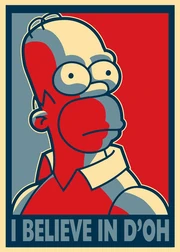
Image source: Simpsons Wiki.
We all make mistakes. Most of the time we can hide them, cover them up, pretend they didn't happen, or even laugh them off. However, I am more exposed when in front of a class - mistakes are easily spotted by students.

A simple typo in course notes is often OK - I can correct this on the fly or point it out to the students as a typo. Sometimes I even remember to update the notes the next day with the correction. If I spot the typo myself I feel OK, if a student spots it first I feel embarrassed. 

What about more serious errors? Errors on exam papers are horrendous - despite all the reviews that take place they still get through. I once had a paper where the marks did not add up to 100%. On another occasion I discovered that I had two errors in the same statistics formula in my course notes - it was pointed out to me by a student. Despite the fact that this formula is rarely used, it was still an error. I had to bring this up in my next class and of course correct relevant course material. Admitting making a mistake in front of 50 students is not easy. One could logically conclude that if had made one mistake in the module - what other mistakes have I made?

Learning from our mistakes is important - I can take some consolation from an article by Dr Lisabeth Saunders Medlock (Life coach and psychologist) "Don’t Fear Failure: Nine Powerful Lessons We Can Learn From Our Mistakes". She writes that "our mistakes and failures are gifts, gems, guideposts in our learning and growth as people" and asks us to "embrace failures, mistakes, screw ups and shortcomings because they not only make us uniquely who we are". She gives us nine powerful lessons to learn from making mistakes:
  1. Mistakes teach us to clarify what we really want and how we want to live
  2. Mistakes teach us to accept ourselves and that we can be flawed and be loved
  3. Mistakes teach us to accept our fallibility and face our fear
  4. Mistakes teach us about ourselves and how to tell our truth
  5. Mistakes teach us, through analysis and feedback, about what works, and what doesn’t
  6. Mistakes teach us to take responsibility
  7. Mistakes teach us about integrity
  8. Mistakes teach us to engage in our lives — to live fully
  9. Mistakes allow us to inspire others

I feel better already!

Thursday, April 14, 2016

What people learn from blogging #262

Blogging teaches you a lot of things - keeping up a daily post is incredibly difficult without posting shite all the time. Koundeenya Dhulipalla writing in kilolani.com suggests seven things he has learned in almost 3 years of blogging:
  1. Blogging isn’t just writing and publishing
  2. Every blogger does not need to be a writer
  3. It is not necessary to post daily
  4. Length doesn't matter
  5. Headings matter – a lot
  6. It’s all about the brand
  7. Monetization is mandatory
Dhulipalla's post makes for interesting reading for someone like me who is trying to post daily - there is some wise advice in his post. Point number 3 above, which I am trying to do, advises "... consistency is important. But that doesn’t mean to publish posts daily just as to maintain consistency even if they are of low quality". Point taken! He reminds us that we "are not alone on the Internet" and that "...there are a billion of other blogs who blog on the same niche. Readers have a choice".

Every blogger, including me, dreams of having a blog that is read by thousands and can make money. In the last 28 days this blog has been read (or at least accessed) 6,620 times and has made a whopping €3.47 in revenue. Despite the minuscule readership I do not plan to give up - certainly this year I hope to keep up a post a day, though next year I will definitely not keep this up. 

The term "blog" is short for "Web Log" - a kind of on-line diary. This is my blog and I hope to keep on doing this for the rest of my life. I learn so much by doing this, I thoroughly recommend it to everyone else!

Wednesday, April 13, 2016

Contrasts in War Cemeteries #263

Yesterday I posted about Holger Eckhertz's recent book about D-Day 6th June 1944 from the viewpoint of the German soldiers who survived the fighting in which thousands died. I mentioned that I had visited the La Cambe German war cemetery in 2008 and added a photo to my post. Wikipedia tells us that there are over 21,000 soldiers buried there. If ever there was a symbol of the waste of life it is at La Cambe. According to Eckhertz, France was considered a good posting for German troops as the alternative was the Russian front. For many it still ended the same way - butchered by bombs, machine guns, and flame-throwers.

My very clear memory of my visit there was how quiet it was and how few people were there. It's almost as if this is a forgotten piece of 20th century history. Certainly on the day I was there there were just a few cars in the small car park and hardly any people visiting this cemetery which is immaculately maintained by the Volksbund Deutsche Kriegsgräberfürsorge e. V. (German War Graves Commission).

The quiet La Cambe German War Cemetery, Normandy.
In total contrast to the peace and calm of the German War Cemetery I then visited the Normandy American Cemetery and Memorial, which is located just 10 miles away in Colleville-sur-Mer - 9,387 soldiers are buried here. I couldn't believe the number of buses and cars in the packed car park - I even had difficulty finding a place for my bike. The approach roads were very busy with traffic and there were huge crowds everywhere. It was like being on a busy city street. Just as at La Cambe, this is a monument to bravery and sacrifice - but wasted life too. The soldiers buried here lie in peace just like their German counterparts 10 miles away. The sea of white crosses is heart-breaking, and it the strongest anti-war message that you can get.


Normandy American Cemetery and Memorial, Colleville-sur-Mer.

Normandy American Cemetery and Memorial, Colleville-sur-Mer.
The photos above were taken at the end of a trip on my bike to the South of France - I was on my way to a ferry in nearby Ouistreham. Two weeks earlier I had passed through Cherbourg on my way south and spotted the Canadian War Cemetery at Bretteville-sur-Laize where 2,958 mostly Canadians are buried. This too was a very quiet location. One of those buried there is Gérard Doré who was killed during the battle for Normandy at just 16 years of age - he's thought to be the youngest soldier killed on the Western Front during the war. I posted a photo of a plaque dedicated to him at the cemetery to Open Plaques.

At the Canadian War Cemetery in Bretteville-sur-Laize.

The Canadian War Cemetery in Bretteville-sur-Laize.

Tuesday, April 12, 2016

Book Review: "D Day Through German Eyes: The Hidden Story June 6th 1944 " by Holger Eckhertz #264

This book has to be one of the most fascinating and saddest books about the Second World War that I have read. When we thing of D-Day in 1944 and the brave advancing Allied troops assaulting beaches in Normandy, we don't often think of the German men and boys who were waiting for the invasion of Europe. This story is fascinating in that it is not Holger Eckhertz's story, but one of his grandfather Dieter who in 1954 interviewed many of the German survivors of D-Day. As in all battles, it was a fight of two forces. In 2008 I visited the German War German War Cemetery at La Cambe in Normandy, and noted that there were 21,000 soldiers buried there. Below in a photo I took at the cemetery - I couldn't help thinking at the time (and now) that there were probably fuck all Nazis buried there, and that they were ordinary lads like me.

Eckhertz's book paints a picture of German soldiers defending what they thought was Fortress Europe against invasion. Their war was one one endless waiting only for the fighting to be over in a few hours, sometimes minutes in savage fighting on both sides. The interviews for the book are with German survivors of the battle, and they describe the overwhelming odds that the Allies possessed in equipment and men. Waiting in a so-called Tobruk was a nightmare - many Germans died in flames without ever seeing an American/British/Canadian soldier.

This book is short and quick to read. Regardless of your politics and thoughts about that bollix Hitler and his bollix henchmen - the lads who manned the guns on D-Day to defend Europe against the allies were only doing their duty - which in the end was to die.

At the La Cambe German War Cemetery in Normandy, 2008.