Showing posts with label Trinity. Show all posts

Tuesday, November 22, 2011

Reputations - Marie Antoinette

This week in the Reputations series of lectures by the Trinity History Department was about Marie Antoinette by Dr Linda Kiernan - this was a really good lecture! Very informative, and full of interesting insights into what people (particularly the French of the late 1700s) thought of her. She was a much maligned woman, and was seriously the victim of a vicious campaign against her by the revolutionaries that ultimately succeeded in getting her to the guillotine. A sympathetic view, but not the complete view as presented by Dr Kiernan.

Image link to Wikipedia.
I particularly enjoyed Dr Kiernan's analysis of the image of Marie Antoinette. Her presentation and illustration of the many pamphlets that were distributed about Marie Antoinette were both entertaining and informative. Also - with 52 slides for her lecture, Dr Kiernan also went to come effort to provide us with as much material as possible. The analysis was deep and thoughtful - her role as a Hapsburg and as a French Queen was critically analysed. This left us in no doubt that Marie Antoinette was both a simple (devoted to family) and a complex character (trying, but failing to be a Hapsburg at a French court).

I have always felt some sympathy for her - for example, she never said "Let them eat cake". She was also portrayed as as a foreigner, lesbian, abuser of her son, frivolous, having undue influence on the King, a whore, among many other things - many untrue. Her trial was a joke, but her execution inevitable. 

Much of Marie Antoinette's problems were due to her being a woman in a man's world. Traditionally, the King's mistresses were singled out as the cause of problems at court, but as Louis XVI had no mistresses -  Marie Antoinette was singled out to blame. She stood no chance.

However, Marie Antoinette and the King were hopeless and useless - they did nothing to revert the tide of public opinion against them. They were extravagant, without any real sense of the misery their subjects lived in. They were true cuckoos in cloud-cuckooland. "Spin" had not yet been invented - they certainly could have done with a PJ Mara or Alastair Campbell at court!

Tuesday, November 15, 2011

Reputations - William of Orange

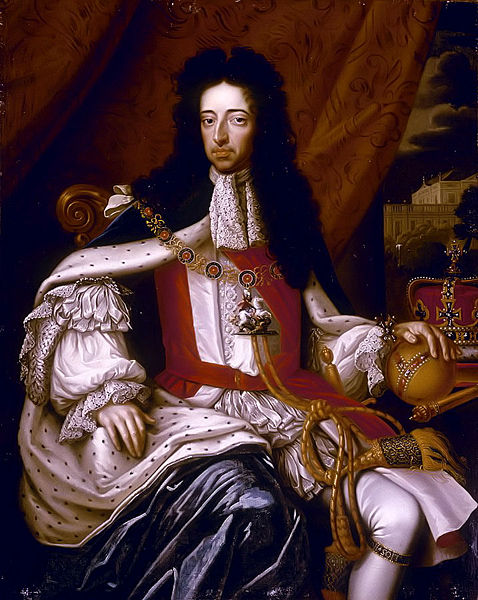
Last evening the Reputations II series of lectures from the Department of History in Trinity College continued after a two week break with a lecture on William of Orange presented by Dr Robert Armstrong. This was a fascinating lecture with the theme of William as a European Statesman - there were many facts and interpretations of William that I had not known before. I was hooked on every word wonderfully presented by Dr Armstrong.

William of Orange.
Image link to Leibnitiana.
William of Orange (or William III) is mostly known to us Irish as the Protestant King who won the "Cogadh an Da Ri" (War of the two Kings) over the Catholic King James II. He was the victor at the Battle of the Boyne in 1690 and is remembered particularly in Northern Ireland by the Loyalist community there. He is not particularly remembered in any other country.

However, as Dr Armstrong told us, William was not really interested in Ireland (he only stayed here for a few months). Instead, he cared about England's position in Europe and the prevention of French dominance. He succeeded in keeping the Netherlands independent, though at a high territorial cost, from the French. When he invaded England in 1688, he may not have intended to become King. He was known to be religiously tolerant, but was also a private and cold person. He was almost constantly at war during his adult life, but was not an especially outstanding commander. His main aim in life seemed to be "Stop the French" and Louis XIV.

Overall - this was a memorable lecture on a leading European character who had a huge influence on Irish history.

Tuesday, October 25, 2011

Reputations - Elizabeth I

Last evening's lecture in the extra-mural series of lectures by the Dept of History in Trinity was delivered by Professor CiarĂ¡n Brady. The subject was the reputation of Queen Elizabeth I.

Elizabeth I.
Image link to Wikipedia.
Prof Brady must be the most enthusiastic lecturer I have ever heard. He absolutely loves his subject and is extremely knowledgeable about Elizabeth, the Tudors, and the mid to late 16th century. In what was a very entertaining lecture, and the best so far in the series, Prof Brady discussed first the reason why Elizabeth never married. This was a combination of her not wanting to marry a Catholic, get involved in Europe's wars, and not wanting to offend the local aristocracy. He told us that he cannot get inside her mind, but he believes these to be the main reasons why she defied everyone's wishes that she should marry.

Prof Brady also discussed Elizabeth as a politician and her difficulties being a woman in a man's world. Her principle predicament was not having the elements at Court that her father Henry VIII had in gathering intelligence to keep her informed of what was going on. Instead she turned to hunting and setting up a series of favourites to keep her informed.

A lively discussion followed during which I asked why she was not married off at an early age by her siblings. Apparently this was because her family were afraid of her producing offspring and the best way to manage her was to keep her barren.

A two week break now before the next lecture. This is an excellent series with lectures by some of the country's most foremost historians - well worth the €100 fee.

Monday, October 17, 2011

Reputations - John Calvin

This evening's lecture from the Reputations course in Trinity was about John Calvin (1509-1564) who created a version of Christian theology called Calvinism. The lecture was delivered by Dr Graeme  Murdock, who I have to say demonstrates extraordinary enthusiasm for such (in his words) a "dour" character. 

Calvin as shown to us by Dr Murdock.
Image link to Calvin Campus Store.
John Calvin is best known as the person on whom Calvinism is based - though he did not set out to found a new religion. He was a workaholic who espoused a moral way of life that in the 16th century was attractive to people who wanted to study the bible and practice their own religion. Catholics at that time were not allowed to read the bible, and the church was corrupt (think the Borgias!). Interestingly he promoted the idea that all Christians were far worse morally that they could ever conceive, and that life was about living according to certain rules of morality. He wrote a book (Institutes of the Christian Religion in 1536) that was well received and was intended to be read alongside the bible - this was a revelation for believers at the time. Calvin did not want his grave to be marked - preferring that in death, as in life, that the body did not matter.

There were 16 people like me at the lecture, including one Calvinist who regaled us of the strictness of the religion when he was growing up. This lecture was one of the most interactive, with comment and questions happening throughout (and not just at the end as in previous lectures). A very enjoyable evening and course so far.

Wednesday, October 12, 2011

Trinity Fresher's Week 1978

Today's Irish Times in one of its regular Archive pieces selects the 12th October 1978 as today's recollection from the past. This article from 33 years ago today is about Fresher's Week in Trinity. And of course it was also my first week in Trinity too, and I was surely there on this date.

Fresher's Week in Trinity.
Image link to TCD.ie.
On 12th October 1978 I had just passed my 19th birthday and was entering Trinity for the first time. As I have written elsewhere in this blog I was completely unready for College life and Fresher's week was a huge awakening for me. The Times reports that "Politicians were plying students with drink" - Garret Fitzgerald, Peter Barry, Enda Kenny, and Mary Harney among others were present to try to get us "Freshers" to join political parties. I remember this quite well - there were a lot of politicians around. I wasn't tempted to join a political party to see them, or get the free drink. I was completely overwhelmed by all the stalls, and Clubs and Societies badgering everyone to join up. The only thing I joined was the Gaelic Football Club who had a stall just inside Front Gate. Beside them was the Soccer Club which I had queued up to join, but the guy in front of me said he was a goalkeeper (which I wanted to be) and I thought that since there was only one keeper position I should try something else. Hence the GAA club. I don't really recall why I didn't join anything else - I do remember that it cost 50p to join any club.

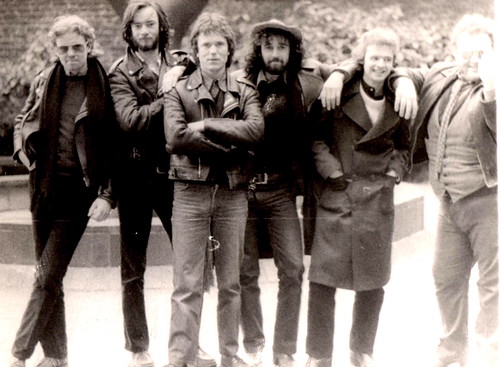
Rocky DeValera & Gravediggers
Rocky de Valera and The Gravediggers.
Image link to grassisblue1's photostream.
Can you remember your Fresher's Week? How did you feel? What did you join? Did you join loads of things and not bother to show up? Fresher's Week is an important week in the lives of all students, but I was too shy to participate fully. By the time I got to 2nd year I did participate a bit more - I even went to the Fresher's Ball for the one and only time. Rocky de Valera and the Gravediggers were the headline act. The previous year it had been The Boomtown Rats.

Students can find out a lot more about life in College than I ever could - the Internet makes this easy. Trinity now has a full web page devoted to Fresher's Week - something I would have found very useful in 1978.

Good on The Irish Times for reminding me of my own Fresher's Week.

Tuesday, October 11, 2011

Reputations - Henry "The Navigator"

The series of extramural lectures on Reputations II: The World's Greatest given by the School of History and Humanities in Trinity, continued last evening with an excellent lecture by Dr David Ditchburn on "Henry the Navigator".

Discoveries Monument in Lisbon.
Image link to GoLisbon.com.
The lecture was as much about Portugal's expansion between 1415 and 1460, as about Henry himself. The most surprising thing for me to discover was that Henry never sailed on any of the expeditions during this period. If fact it is suspected that Henry never even left Portugal! The title "Navigator" was only assigned to him in the 1800s - over 400 years after his death. He certainly supported and benefited enormously from the expeditions.

Dr Ditchburn explored the many reasons why Portugal expanded first in Morocco, and then on to other parts of  Africa. There was a strong Crusader influence to the expansion - the Moors had only been kicked out of Portugal not long before the expansion began. Rivalry with Spain was a key influence. There was also a "something to do" motive for Henry's father Joao I's sons to be involved in. Curiosity about what lay beyond the current limits of exploration also played a part, as did overcoming the de-population of Portugal during the Black Death in the previous century. Undoubtedly the lure of gold and booty also attracted adventurers.

Henry certainly did not deserve the title "The Navigator", but as Dr Ditchburn pointed out - it also has a modern context in that Portugal's dictators (Caetano and Salazar) in the 20th century looked to historical characters like Henry to promote him as a global Portuguese hero.

Finally, I found that this lecture was most interesting and it held my attention throughout. This is a tribute to Dr Ditchburn's ability to keep us interested and focused on a fascinating character from history.

Tuesday, October 04, 2011

Reputations - Alexander the Great

I went back to College yesterday for the first time in over 20 years. I am attending an extramural course in Trinity - this one is called "Reputations II: The World's Greatest". I did feel a little bit nervous walking up to the Jonathan Swift Theatre - Who would be there? Would I recognise anyone? How many would there be in the class? What would the lecturer be like? Would the course be any good?

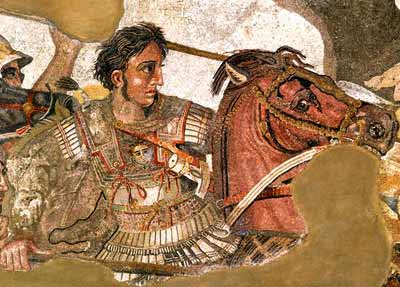
Alexander "The Great"?
Image link to 1902encyclopedia.com
Extramural courses in Trinity are an excellent idea to give people the chance to hear experts in certain fields lecture about their areas of expertise. For the first class, Dr Shane Wallace, delivered a lecture on Alexander "The Great"? Dr Wallace is a new lecturer in Trinity and is very young - good luck to him in his academic career which has just started. He reminds me of me in my late 20s (but without a job).

The first part of the lecture was a bit tedious - it was basically a chronology of Alexander's life, battles, and conquests. Much of this would be known to anyone with a good general knowledge. But where Dr Wallace, and his lecture, came into its own was in the second part where he explored the epithet of "The Great" which was added to Alexander's name many years after his death. The main thrust of his argument was that "kingship" and "divinity" were the main contributors to the addition of "The Great" to his name. In an excellently researched background, Dr Wallace explored the many myths, legends, and recorded stories about Alexander - compares them to contemporary accounts, and truly asks the question - was Alexander "Great". I believe, on the basis of what Dr Wallace told us, that yes - he was "Great".

I enjoyed my first lecture as a "student" in 20 years. There is no registration, ID cards, or access to the Library with this course. There are eight more "Reputations" to explore - next week it is Henry the Navigator which I am looking forward to.